Internships, study abroad and research at Claremont McKenna

claremont mckenna college

Claremont McKenna College is a highly selective college among the consortium of The Claremont Colleges and has a real world focus. Students who fit well at Claremont McKenna have high ambitions in business leadership and public affairs. Although its student body of 1,300 qualifies as “small”, the campus has much to offer students interested in government, economics, business, and international relations. A senior said that Claremont McKenna is a “great place for a practical liberal arts education that prepares you for grad school and career.”

claremont mckenna business policy internationalClaremont McKenna community is guided by a free exchange of ideas, real world service and work experience, and opportunities for advance research – 93% of students participate in internships, 50% study abroad and 79% do research. The 11 research institutes located on campus offer CMC undergraduates numerous opportunities to study everything from political demographics to the environment.

Campus visit note: If you’re planning to visit more that one of The Claremont Colleges, plan to spend at least a day since the campus visit schedule usually has times that overlap.



Additional quick facts about Claremont McKenna:

Acceptance: 11%

Freshmen retention: 95%

Freshmen from out of state: 54%claremont mckenna campus

4-year Graduation rate: 77%

Most popular majors: Economics, Government, Psychology

Housing: All freshmen live on campus and approximately 90% of upperclassmen. Since there are no all-freshman dorms, each residence has a minimum of 20% of new students. Gender-inclusive housing is an option where students can live with any student regardless of identity.

Similar colleges to consider to develop list: University of Southern California, Occidental College, Georgetown University, Brown

Financial aid: Claremont McKenna College offers both need-based and merit aid, with 100% of need met. Although the cost of attendance is $70,000, the average financial aid package is $38K. About half of students receive scholarships/financial aid.

What do you think about Claremont McKenna? What about this college is a good fit? Please post your comments below.

Furman offers internships and research in all-residential community

Furman is a small, liberal arts college located in Greenville, SC that takes advantage of its size and location. The 2,700 undergraduates have access to faculty-mentored research projects and all faculty serve as advisors. The largest class at Furman has only 32 students. Over two-thirds of Furman students participate in internships, often with the 200+ companies in the local area. As a 100% residential campus, students can build long-lasting friendships throughout their undergraduate years.

Two Furman programs worth noting are the 5-year program in Education and another in Chemistry.


Acceptance: 65%

Freshmen from out of state: 72%

Most popular majors: Political science, Health Sciences, Business Administration

Housing: Furman is 100% residential, which means that all students live on campus all 4 years. They fondly describe their housing system as “7 years of friendships”!! Varied housing options on campus include apartments and eco-housing for sustainable living.

4-year Graduation rate: 79%

Academics:  Furman’s Health Sciences major is particularly strong for its pre-med students. Furman’s program helps pre-med students with getting all of their non-academic requirements for a competitive medical school applications – research, internships and community service. Pre-med majors also get assistance with MCAT and medical school applications.

Furman offers a May immersion experience with 2-credit courses. Undergraduate research opportunities start in the summer after freshman year with a faculty mentor.

Many Furman students graduate with a minor. The most popular minor is Poverty Studies. The fastest growing major is currently Sustainability Science.

Social: Participation in campus life is encouraged through 4 required “cultural life” points per semester. There are 200+ cultural life activities a year, so it’s rather easy for students to get credit for taking advantage of all the fun and interesting events.

Financial: Furman offers merit aid and need-based financial aid, with 80% of need met, towards the cost of attendance, which is around $64,000. Furman’s merit scholarships do not require test scores to qualify.

What do you think of Furman? What do you think of test-optional scholarships? Please post your comments below.

Vassar has an independent, interdisciplinary and creative spirit

Vassar is a highly selective, small, coeducational liberal arts college, located just 70 miles north of New York City and known for its liberal traditions. Vassar prides itself on curricular flexibility, tolerance, and diversity.vassar liberal arts college

Multidisciplinary studies have been a distinctive feature of academic life at Vassar for several decades, fostering an intellectual environment that thrives on crossing disciplinary boundaries. A great example of this academic freedom and mindset is the Interdisciplinary Robotics Research Laboratory, created by five professors in biology, psychology and computer science where students can investigate with physical robots as well as computer simulations of virtual robots.

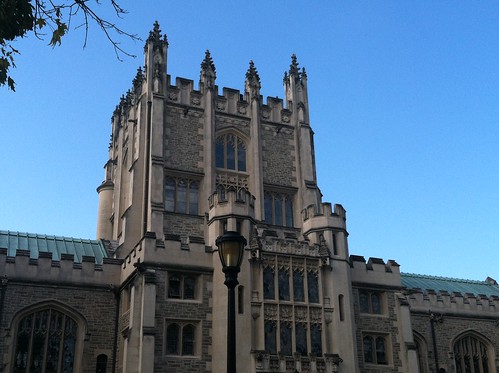
The college’s 1,000-acre campus, just outside Poughkeepsie, New York, is decorated with architecture which is predominantly neo-Gothic and yes, the library does look like a scene out of Harry Potter.

Acceptance: 26%

Freshmen from out of state: 71%

Most popular majors: economics, English, psychology

Housing: Guaranteed housing all four years

4-year Graduation rate: 88%

Vassar College

Academics: Vassar began as a women’s college in 1861 and went coed in 1968. There is no core curriculum and no general education or distribution requirements. Academic flexibility is paramount. That said, all students must take a Freshman Course, a small seminar emphasizing oral and written expression, as well as one course that requires significant quantitative analysis (similar to Hamilton College, also in New York).

More than half the students at Vassar double-major, with the most popular majors being English, political science, psychology, economics, and biological sciences. 70% of Vassar students go to graduate school, with medical school being the largest percent. Absolutely love that all freshmen have their own librarian.

Social: Vassar doesn’t have a Greek system, so social life revolves around films, lectures, parties, concerts, and the like. With its strong theatrical department, Vassar has 50+ theatre productions per year. A senior remarked that, “There are more than 1,000 events registered on the campus every year, which is nearly 40 events a week.”  Student Association, WVKR radio station, Vassar Greens, and ultimate Frisbee are influential in student social life. Popular events include Spring Concert, Founder’s Day, and All Campus Halloween Party.

Financial: Vassar offers merit scholarships and need-based financial aid, with 100% of need fully met.  The average financial aid package is $45,000 and 60% of students receive awards. Interestingly, the family income of students who received financial aid ranged from $0 to $270,000.

What do you think of Vassar? What about this college is a good fit? Please post your comments below.

A Guide on How to Apply for FAFSA

Navigating the financial aid process is a crucial step for college-bound students and their families. One of the most critical tools in this process is the Free Application for Federal Student Aid, or FAFSA. Understanding how to apply for FAFSA, how to fill out FAFSA correctly, and how to add schools to FAFSA can significantly impact the financial aid you receive.

Additionally, many students wonder, “Should I apply for FAFSA before being accepted?” and “Do all schools require the CSS Profile?” This comprehensive guide will answer these questions and provide you with essential tips to complete your FAFSA and CSS Profile efficiently.

FAFSA: The Basics

Families can begin applying for financial aid through FAFSA starting on October 1st each year. This early opening date aligns well with the college application process, allowing students to submit their FAFSA information alongside their college applications.

Given that many students apply to colleges with early action deadlines, having your FAFSA completed early can be advantageous. Schools like Georgia Tech have early action deadlines as early as October 15th, and many others, such as MIT, The Ohio State University, and Purdue, have early deadlines in November. Completing your FAFSA early ensures that colleges have enough financial information to make preliminary decisions about financial aid awards when they release admissions decisions in mid-December or January.

How to Fill Out FAFSA: Step-by-Step

Filling out the FAFSA might seem overwhelming at first, but with the right preparation, it can be a straightforward process. Here are the top steps to follow:

  1. Create Your FSA ID: Before you start the FAFSA, you and your teen need to create separate Federal Student Aid (FSA) IDs. These IDs will be used to fill out the form and update information in subsequent years. Make sure to store your FSA ID securely.
  2. Start the FAFSA at fafsa.ed.gov: Once you have your FSA ID, you can begin filling out the FAFSA online. The form includes over 100 questions, but you don’t have to complete it all at once—you can save your progress and return later. The system will store your information for up to 45 days.
  3. Add Schools to FAFSA: While filling out the FAFSA, you’ll have the opportunity to list the colleges where you want your financial information sent. You can add up to 10 schools initially, and if you’re applying to more, you can update your FAFSA later to include additional institutions.
  4. Gather Necessary Documents: To streamline the process, gather all necessary documents before starting the FAFSA. These include social security numbers, alien registration numbers (if applicable), federal income tax returns, W-2 forms, records of untaxed income, and current bank statements.
  5. Use the IRS Data Retrieval Tool: To simplify the financial information section, use the IRS Data Retrieval Tool (DRT) to transfer your tax return data directly into the FAFSA. This tool reduces the chances of errors and ensures that your financial information is accurate.

Should I Apply for FAFSA Before Being Accepted?

Yes, you should apply for FAFSA before being accepted to a college. Completing the FAFSA early allows colleges to consider your financial information when making admissions decisions. It also ensures that you don’t miss out on any first-come, first-served financial aid. Many schools begin awarding aid packages as soon as they start accepting students, so having your FAFSA on file early is crucial.

Do All Schools Require CSS Profile?

Not all schools require the CSS Profile, but many private colleges and universities do. The CSS Profile, administered by the College Board, is used by schools to award non-federal financial aid. Unlike FAFSA, which is free to submit, the CSS Profile requires a fee, though fee waivers are available for eligible students. The CSS Profile asks for more detailed financial information than FAFSA, and it’s important to check whether the schools you’re applying to require this additional form. You can find this information on the financial aid section of each college’s website.

Tips for Last-Minute FAFSA and CSS Profile Completion

If you’re completing the FAFSA or CSS Profile at the last minute, here are some tips to save time and reduce stress:

  1. Your Teen Leads the Process: Remember that both the FAFSA and CSS Profile are in your student’s name, not yours. This means your teen will need to create their own FSA ID and College Board account. Parents can assist with the financial details, but the student must take the lead.
  2. Plan Ahead: Obtaining an FSA ID can take 2-3 days due to social security number verification. If you’re short on time, you can start the FAFSA without the FSA ID by using your student’s information. Be sure to return later to officially sign the FAFSA once the FSA ID is ready.
  3. Verify and Update: After submitting your FAFSA, set a reminder to check for any required updates or verification, especially if you initially submitted without the IRS Data Retrieval Tool. Ensuring all information is accurate and complete is vital for avoiding delays in receiving financial aid.

Conclusion

Understanding how to apply for FAFSA, how to fill out FAFSA, and how to add schools to FAFSA can make a significant difference in the financial aid process. Applying for FAFSA before being accepted is essential for maximizing your aid potential, and knowing whether your schools require the CSS Profile can save you time and effort. By following these tips and planning ahead, you can navigate the financial aid process with confidence and secure the funding needed for your college education.

If you have any questions or need further assistance, don’t hesitate to reach out for help. Good luck!

PSAT Tips: Does the PSAT Matter?

psat

College-bound teens take the PSAT every year in mid-October. The PSAT is the test that high school juniors take to qualify for National Merit recognition, although more 9th and 10th graders are taking this test each year. In addition, the PSAT gives students practice and feedback for the SAT. After taking the PSAT, students will get a full report which details the questions they missed. This report can be a useful guide to prepare for the SAT.

Does the PSAT Matter?

Each fall, parents with 9th, 10th, and 11th graders ask me about the PSAT and whether their teen should study for the PSAT. As with most things in college readiness, it depends.

Let’s start with a general description of the PSAT to make sure we’re all on the same page. It’s considered a preliminary SAT exam and students often take it to get an unofficial look at the SAT. “Unofficial” means that this test is “off the record” for college admissions purposes. It’s rare that students would submit these scores for consideration in college admissions.

PSAT Tips for Different Grades

PSAT for 9th Graders
Most high schools do not offer the option for 9th graders to take the PSAT, although I have seen it offered at several independent schools. Typically, I do not recommend that students take the PSAT in 9th grade. It adds too much unnecessary pressure and anxiety. The 9th grade is such a transitional period that the year is better spent acclimating to the new school environment, making friends, and getting to know teachers.

PSAT for 10th Graders
Taking the PSAT in 10th grade can be a good idea if your high school offers that option. 10th graders who take the PSAT can get familiar with the format and determine their own level of comfort with the question types. The results would also closely project SAT scores. In addition to the PSAT in sophomore year of high school, I highly recommend that students also consider taking the pre-ACT. The pre-ACT is an unofficial preview of the ACT. Taking the pre-ACT would be an opportunity for sophomores to get familiar with the ACT format and determine their level of comfort with the question types.

The results of the PSAT and pre-ACT can then be compared, using an SAT-ACT comparison tool to determine if a student should take the SAT or ACT in junior year. It’s a waste of time and money to take both tests, so I highly recommend that students stick with one test . . . either the SAT or ACT! Sophomore year is an important year for students to discover their interests and further their academic preparation. Spending time to study for the PSAT or pre-ACT is not a good use of their time. Certainly, students may look at practice questions if they like, but I would not suggest prioritizing PSAT and/or pre-ACT test prep over homework assignments and reading for pleasure.

PSAT for 11th Graders
The majority of high schools in the US require that high school juniors take the PSAT. The PSAT is used in junior year as the qualifying exam for National Merit Scholarships. Even when students take the PSAT in junior year, they must still take the SAT or ACT to meet college admissions requirements.

I have recommended that my students study for the PSAT in only a few cases. When I recommended that my students study in junior year, they met these criteria:

  1. Had taken the PSAT in sophomore year
  2. Had scored in the 99%ile on the PSAT in sophomore year (Each state has its own National Merit Scholarship baseline so be sure to look it up for your state.)

Those students were in striking distance of qualifying for National Merit Scholarship, so it made sense for them to study for the PSAT in advance. Their study plan often included the completion of two or more practice tests before the test date and thorough reviews of reading, writing, and math.

Reasons to Study for PSAT

  • To get a higher score than last year
  • To have a chance at a National Merit recognition
  • To present stronger scores for a summer program application

Reasons to NOT Study for PSAT

  • Did not take the test last year
  • Scores from last year were below 750 for each section
  • Academic course load is demanding
  • ACT is the best test for the student

In most cases, students do not need to study for the PSAT. It’s an annual test that plays a marginal role in college admissions. If a student’s best test is the SAT, then they would be better off focusing their prep efforts on the SAT, instead. The best time to prep for the SAT is usually 8-10 weeks prior to the scheduled test date. If the PSAT date coincides with the SAT prep, then it’s a win-win.

Rule of Thumb: Test prep should never take precedence over maintaining a strong transcript whether a student is in 9th, 10th, or 11th grade.

Please let me know your thoughts and/or comments on this topic.

5 tips for college-bound 9th graders: What parents must know

college-bound tips for 9th graders

School is back in session!

The transition from middle school to high school is a critical point in your teen’s educational journey. 9th graders are part of a new community, and their teachers, school counselor, and administrators are there to help them explore this new journey!

As a parent, you may notice some of the emotional ups and downs that come with navigating a new school, making new friends, learning from new teachers, balancing new time and academic demands. I have been there with my own teens and go through it each year with my students . . . in other words, “I feel you”.

Freshmen may not understand the importance of 9th grade in the overall college admissions process yet, but it doesn’t hurt for parents to be informed. Parents can be helpful to their college-bound freshman without “taking over” or being accused of helicoptering. Here are my top 5 tips that parents can follow and still look good.

  1. Start a file of important papers such as test scores, report cards, articles, scholarship opportunities, etc. Although you are starting the file, please remember to give it to your teen well before junior year so that they can be accountable for tracking their progress.cornell campus


  1. Set aside time to meet with your 9th grader to develop their 4-year course plan. Mapping their courses for each year of high school will challenge them to set realistic goals and balance academic rigor with interests. Sign up for our monthly freshman roadmap and you will receive our Compass ReadiGuide for Course Planning.


  1. Emphasize the importance of building positive relationships with ALL of their teachers. Your teen will need teacher recommendations for summer programs, scholarships, and college applications. A challenging goal for your 9th grader may be to meet with 1-2 teachers each month. Taking these consistent small steps can lead to a positive relationship where your teen gets to know the teacher and the teacher gets to know your teen.


  1. Encourage your 9th grader to schedule a meeting with their school counselor. School counselors may have interest/career inventories, ACT/SAT practice tests, as well as information about summer programs or scholarships.


  1. Assist your 9th grader in finding fun and interesting ways to volunteer. Volunteering in the community provides an opportunity to develop a sense of care for others, learn your capabilities, broaden experiences, and grow interpersonal skills.


This brief checklist highlights what parents can do this school year. However, if you’re a busy parent like me, you may not remember these tips in winter. Perhaps a regular “check-in” reminder would help you stay on top. . .

What other tips for 9th-grade success would you suggest? Please post in comments below.

Vanderbilt beyond beautiful campus: A great fit for engineering, research, community, study abroad and foodies

Vanderbilt University

Vanderbilt University, the smallest and only private college in SEC conference, offers 68 undergraduate majors across four schools and colleges: the College of Arts and Science, School of Engineering, Peabody School of Education and Human Development, and Blair School of Music. Students apply to a school. Each school is special in its own way and worth highlighting further. Students in the College of Arts and Science can design their own major. There are 8 tracks in the School of Engineering and students choose 3 of those tracks in which to take courses during their freshman year. The Organization Development major in the Peabody School requires an off-campus internship either in 2nd semester junior year or first semester of senior year. Since the Blair School only has an undergraduate program and is NOT a conservatory, students earn their degree through another school.

Prospective students usually fall in love with the Vanderbilt campus. Its park-like campus is located in the heart of Midtown, surrounded by restaurants, shops, and cultural destinations. There are, in fact, over 80 restaurants within walking distance of the campus. (Foodies beware!) On the main campus, art and sculptures dot the landscape and architectural styles range from Gothic to modern glass and brick.

Vanderbilt University

Don’t let the beautiful campus fool you, though. . . .Vanderbilt is still one of the most selective colleges in the US. Check out their acceptance rate and these additional quick facts about Vanderbilt:

Acceptance: 8.8%

Freshmen from out of state: 89%

Most popular majors: social sciences, engineering, interdisciplinary studies (No wonder with the flexibility students have to double-major across schools.)

Housing: 86% of undergraduates live in the dorms. All freshman live together which can be a plus for meeting new friends and building a tighter class community.

4-year Graduation rate: 84%

Academics: Vanderbilt’s study abroad program attracts 35 percent of students and offers the chance to spend a summer, a semester, or a year on one of six continents through 130 programs. There’s even a May-mester option to study abroad, so no excuse for students not to take advantage of this amazing opportunity. An interdisciplinary approach to learning is embraced and undergrads are encouraged to take classes across all four schools. From their first year, undergraduates can get involved with cutting-edge research with world-renowned faculty and participate in internships. Keep in mind, though, Vanderbilt does not offer a “co-op” program.

Social: Vanderbilt students have remarked that “Nashville is so much fun,” and “The list of excellent restaurants, bars, shopping, and live music venues is endless.” In addition to the 500+ student clubs, over half of undergraduate women participate in sororities and 30% of the guys. Although many Greek parties are open to the entire campus, the strong participation in Greek life may suggest that Vanderbilt is not be the best fit if a teen is not interested in Greek life.

Vanderbilt has a long tradition of community service, starting an “alternative spring break” as far back as the 70s. Today, an impressive 75% of students participate in community service.

Financial: Vanderbilt offers university grants and need-based financial aid, with 100% of need fully met.  Their financial packages do not include loans (hooray!). Thus, Vanderbilt’s offers include only gift monies and a small amount of expected student employment.

What do you think of Vanderbilt? What about this college is a good fit? Please post your comments below.

Oberlin: Funky intellectual community with lots of music, art and co-ops

Oberlin has a distinct history of challenging intellectual and social conventions. It was the first to adopt a policy to admit students of color and the first to educate women in an undergraduate program. This history shapes the diverse student experience today. Individuality is valued at Oberlin, which fosters strong bonds among an eclectic community of bright and talented students from around the world. Interestingly enough, much of the domestic student body hails from New York and California.oberlin music

Oberlin is an intellectual community where students explore ideas because they are inspired to learn, not for the sake of grades. Since 1920, more Oberlin graduates have earned Ph.D.s than have graduates of any other predominately undergraduate institution. Wow!

Acceptance: 33%

Freshmen from out of state: 95%

Most popular majors: politics, biology, music

Housing: All freshmen live on campus. Only seniors can live off-campus. The varied housing options include co-ops, several of which focused on foreign languages. For $5, students can rent up to two original works of art to decorate their room (what a deal!). Every dorm has a piano.

4-year Graduation rate: 73%

Academics: Oberlin has been a leader among liberal arts colleges that promote their science offerings, with biology and chemistry being two of their strongest departments. Undergraduates can also major in interdisciplinary programs like neuroscience and biopsychology.

There is no core curriculum but students must take classes humanities, social sciences and natural sciences. Oberlin offers a winter term, which allows independent study in January. Undergrads must complete 3 winter terms to graduate.  75% study abroad and 65% engage in research with faculty mentors.

A nice perk to having a conservatory on campus is that private lessons are free when you take a music class for credit.

Social: Music is big on Oberlin’s campus. My tour guide boasted that there are 2-3 music events held on campus every day. Some of the most popular events feature music performances, such as orchestra concerts, jazz ensemble concerts, opera and theater productions, Friday Night Organ Pump concerts, and Hip Hop Conference. Student radio is the second largest organization. Students actively participate in 200 student groups and 70% engage in service projects.

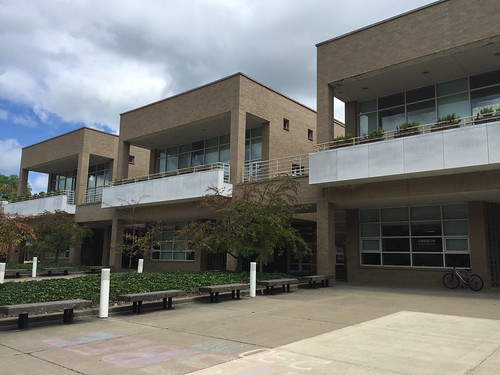
Oberlin College & Conservatory

Financial: Oberlin offers merit aid and need-based financial aid, with 100% of need fully met.  Although the tuition and fees are $67,000, the average financial aid package is $37K. 83% of students receive scholarships. Oberlin offers both need-based and merit aid. Oberlin meets 100% of need.

What do you think about Oberlin? What about this college is a good fit for you? Please post your comments below.

Union College has interdisciplinary studies, engineering and unique study abroad options

union campus engineering

Union College is known for its interdisciplinary studies and study abroad programs. To emphasize creativity in its engineering programs, Union supports STEAM (with arts). During my visit there, I was most impressed with the high rate of graduation for women in the sciences and engineering. Union has a rather unique program in Siberian Russia which combines Russian studies and environmental studies. Building on a strong sense of community, all faculty, staff, and students are assigned to a “house” which is a space for them with seminar room, programming and community. (Upperclassmen can live in the house.)

Here are a few quick facts about Union College:
Union College

Acceptance: 38%

Freshmen from out of state: 75%

Most popular majors: economics, biology, psychology

Housing: Guaranteed housing freshman year

4-year Graduation rate: 80%

Academics:  “Union has outstanding academics.” says a freshman. Union operates on a trimester system, which means thrice-a-year exams and a late start to summer jobs—but also the opportunity to concentrate on just three courses a term. The common curriculum has modern language requirements and 5 writing across curriculum courses within the 7 distribution areas. Engineering majors must declare by the end of freshman year – bio-, mechanical, electrical, or computer. Union also provides wonderful opportunities for students to study abroad. One program allows students to study for a term in Siberia, Russia, delving into Russian and environmental studies. The professors here at Union are simply wonderful.” says another student. Students can expect to see full professors at the lecterns rather than TAs. 

Social:  “The majority of social life is on campus,” says a student. Campus events also include comedians, concerts, and speakers. What Schenectady lacks can be found in Saratoga Springs, which boasts restaurants, jazz clubs, horse racing, and Skidmore College, or in the nearby Adirondacks and Catskills. Popular road trips include Boston, Montreal, New York, and the ski slopes of nearby Vermont. Union’s athletic teams compete in Division III, aside from men’s and women’s ice hockey, both of which are Division I. 

Financial: Although the tuition and fees are approximately $62,274, Union College offers grants and need-based financial aid, with the average need-based scholarship of $32,000. 100% of need is fully met, although the Union is need-aware. Union does not combine merit and need-based aid.

What do you think about this college? What else would you like to learn about it? Please post your comments below.

7 Tips For Middle School Parents

Middle school

The middle school years can be confusing for teens, as well as for parents! Middle schoolers want more independence from parents, yet they need even more support to navigate all the physical, cognitive, and social changes of adolescence. How do parents balance giving them autonomy and support (without embarrassing them)? Parents with middle-schoolers often feel “left in the balance” as their role and relationship with their teen is evolving.

There’s plenty of parent involvement in elementary years but a lot less in middle and high school years. However, research has shown that when the parents are engaged, kids are more likely to achieve in school, even when they’re older! What I’ve seen with many parents is that they continue to “manage” their kids live at home, but lessen their involvement at school once their teen is in middle school.

Here are my 7 tips for middle school parents to stay involved in the school and learning experience:

1. Get to know teachers

In the first weeks of school, meet the teacher and find out their expectations for success, exchange email addresses, and stay in touch regularly.

2. Meet other parents

Getting to know other parents can be especially helpful if you’re unable to attend all school events regularly. I suggest meeting other parents through any opportunity other than chaperoning a school dance! (Been there, done that and won’t do it again.)

3. Bookmark school website

Checking the school website regularly can keep you abreast of homework assignments, test schedules, and school-wide events.

4. Help with homework but do NOT do it

Checking a math problem, proofreading a paper, asking questions to help your teen figure out the answer are forms of helping. Once the parent puts pen to paper or gives the answer . . . they’re doing.

5. Monitor screen time

Even when it’s hard to say “no”, it’s so important for teens to have boundaries when it comes to social media/phone/internet/video game time. Consider setting a family policy on-screen time at the beginning of the school year and stick with it!

6. Post a family calendar

Help your middle-schooler develop time-management skills by writing important school dates, family travel, project deadlines, parent night outs, etc. for all family members in one place.

7. Make family time/meals at home a priority

Did you know that regular mealtime at home is the greatest predictor of high achievement? What happens at home greatly impacts what happens in the classroom!

These tips have worked for me to stay engaged with three teenagers while working and staying active in my community. I’d love to know what tips have worked for you as a busy middle school parent. Please tell me in the comments below.