Why You Don’t Need to be a Well Rounded Student

During this time of year as teens are getting more involved in school activities, a question that many students and parents raise is whether it’s best to be more “well-rounded.” The term “well rounded student” refers to someone who has experiences in a range of varied activities. “Should I(my teen) be “well rounded” often translates to ‘”Will this help me(my teen) get into college?” The concept of “well–rounded “ was born in hindsight from a 1980’s myth of how students got accepted to most selective colleges.

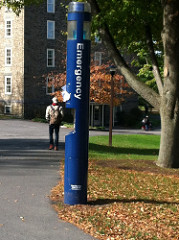
My question back to them is “What’s your goal?” It’s not meant to be a smart-alecky response but the emphasis on every aspect of the college admissions process is the student. well rounded student, Colgate Campus
My recent e-newsletter shared what colleges today want and many parents were abuzz about what this means for their college-bound teen. Colleges want engaged, curious learners. This new revelation can be unsettling because it’s the opposite of “well-rounded”.

Over the years, I’ve read thousands of applications and spoken with numerous admissions officers about what they seek in prospective candidates and “well-rounded” isn’t just dead among the most selective colleges but an even broader landscape. The activities resume filled with 15-20 activities may show busy-ness, but too often lack evidence of these qualities:

    • Interest – are you really that interested in an activity that you’ve only spent a few hours doing in 9th grade? Based on your activities resume, what are you interested in?
    • Commitment – where is the evidence of your commitment? College communities thrive on student commitment.
    • Impact – what difference was made by your participation? do your activities show what impact you made on your school or community through your involvement? When a student is doing an activity for the sake of appearing “well rounded” then they may not be around long enough to take a leadership role, influence the direction, mentor other students, or make any impact at all.

In closing, I go back to my initial response, “What’s your goal?” The entire college admissions process is about the student NOT the college. If the student is doing an activity just for the sake of getting into college, it will come through in their laundry list of activities and especially their application essays. When students focus their time and efforts on those activities they enjoy, have an interest in pursuing, and make an impact on others involved with them . . . that’s when students have the best chances of getting in and getting money for college.

well rounded student

Is Occidental College a Good School? Let’s Find OUt

Occidental College

Minutes outside of downtown Los Angeles, Occidental College is tucked away in a beautiful campus full of trees and flowers. Even more colorful than Oxy’s environment though is its school culture: energetic, socially conscious, supportive, and motivated.

Here are a few quick facts about Occidental:

Acceptance: 42%

Freshmen out of state: 43%

Most popular majors: Diplomacy and World Affairs, Economics, Politics, Science, Urban and Environmental Policy, Theater, Art History and Visual Arts

Housing: Required for freshmen, sophomores, and juniors

4-year Graduation rate: 78%

Occidental College

Academics: Classes stay small at Occidental, and students and professors build strong relationships quickly. Because so many students are motivated in diverse fields, Oxy provides its students with a number of special programs and encourages learning experiences outside of the classroom. For students interested in international relations, Oxy has a unique program with the United Nations, unlike any other offered.

Social: Having L.A. in your backyard is nice, and free vans can get you downtown or on the beach in ten minutes. But Oxy’s campus usually brings a lot of its own excitement on the weekends too. Spirited games, concerts, dances, parties, and Greek functions are all available for students.

Financial: Oxy offers need-based financial aid, grants, and merit scholarships. 100% of the need is met. Although the tuition and fees are $63,901, the average financial aid package is $42,541. 81% of students receive grants and 11% receive merit scholarships.

Motto: “Occident Proximus Orienti” – The West is nearest to the East

What do you think about this college? What else would you like to learn about it? Please post your comments below.

Is it too soon for a Campus Visit?

Parents ask me all the time “Is it too soon to go on a campus visit?” Unfortunately, the parents who usually ask that question are indeed asking too soon. There is such thing as too soon for campus visits because too many students get burned out on-campus visits when they start their visits well before the application process.

Campus visits matter most in junior and senior year of high school. When students are visiting colleges at a time when it’s relevant then they tend to learn more from the experience. Also, for colleges that track “demonstrated interest”, having an official visit during that time can help with admissions prospects. The other benefit of visiting when students are actively engaged in the application process is that the visit helps with writing a more compelling essay about why that particular college is a good fit.

Rice campus
Rice has a beautiful campus, much like an urban oasis!

There are a few colleges that may host special events for 9th or 10th graders. I think those visits are OK to attend, perhaps as part of a family trip to that area. I don’t suggest making a special trip out of the way just to attend.

What I see more often is that parents are taking their middle schooler or 9th grader to visit the more prestigious, selective universities. That adds a lot of unnecessary pressure and stress. Yes, Princeton may have a beautiful campus, but is it really necessary to visit when it’s not even certain that Princeton is a good fit for your teen? It can even be a bit tricky when a parent takes their child to a reunion event. That too can set the expectation that your child should attend or at least apply to your alma mater.

The best time for students to visit in the winter and spring of the junior year after researching where it makes the most sense to visit. The summers are good for visits, but families should keep in mind that the campus vibe may be a bit quieter and less impressive. Some colleges offer special overnight visits for seniors. These are great to take advantage of but it can be hard to fit into the senior schedule, especially if a teen has a fall sport.

So the short answer to our initial question on is it too soon to do a campus visit is “Yes!” If your teen is a middle schooler or 9th grader, it’s too soon for a campus visit. Those years are better spent doing well academically and making good choices socially. The end of sophomore year is the earliest I would recommend a campus visit.

When are you starting your campus visits? Please post comments below.


ALERT College-bound Juniors – AP scores are back, Now What?

AP scores

High school sophomores and juniors can access their AP scores this week! While there may have been high anxiety and a few sleep-deprived nights in May, students may have some butterflies as they open their online accounts to see the results.

What do your scores mean

AP scores will range from 1 to 5. An AP score of “1” or “2” may feel like a real downer, given all the late-night studying. A “3” on the AP exam shows proficiency, but may not get any attention from colleges. The scores that colleges may notice are “4” and “5”. When I say notice, it can mean that the college will allow the student to either

  1. Skip an introductory level college course in that area of study
    -or-
  2. Get college credit

One of the things that students must be careful to do is check with the college’s department to determine whether any course upgrade or college credits will be granted. I advise doing so after a student has determined where they will enroll in college. It wouldn’t make sense to determine the college list based on getting college credit, since the colleges may change their policy.

Whether a college allows a student to skip an introductory level course or grant college credit is specific to each college. If the college does neither, then students shouldn’t feel as if they wasted their time. In the admissions process, colleges will consider the rigor of the high school curriculum. Taking an AP course is still a good way to show that students challenged themselves during high school.

What do you think about AP? Is it worth it?

3 tips every Parent needs to Know about the Common App

You have likely heard about the Common Application and have some questions about what it means for your college-bound teen. As a general overview, the Common Application officially started in the 70s. The system we know today, however, wasn’t really defined until about 2000. A significant turn for the Common Application then was that the organization determined that its focus would be on holistic college admissions. What that means for you today is that all the colleges that are members of the Common Application have a holistic selection process.

Common App
Common App opens August 1

Those colleges consider transcripts, test scores, teacher recommendations, essays, activities, and other supplemental materials which give the colleges a more complete perspective on how that student will contribute to the college community.

Here are 3 hot tips every parent will benefit from knowing:

  • Not all colleges are on the Common App – There are over 500 colleges on the Common App, compared to about 2500 4-year colleges. The colleges that are not Common App members can have any selection process that fits their college mission. On the other hand, some colleges may have a holistic selection process but may want to use their own systems for managing the volume of applications received.
  • When your teen signs the Common App, they are agreeing that . . .

a) the essays are their own writing,

b) all the information is true (i.e. all test scores and school suspensions must be reported, even if they happen in senior year), and

c) they will only send a deposit to one college when they make their decision.

It’s easy to forget these details when students are excited about their admissions letters, but keep in mind that all admissions decisions are conditional and can be revoked at any time.

  • You can get your own Common App account – I suggest that if parents are curious about what their teen is submitting on the Common App then they can get their own account. This will allow you to understand more about the requirements and stresses of meeting the application deadlines!

This is an exciting time with your college-bound teen. I hope that you will allow your teen to own the process, as you participate in the journey.

What additional questions or thoughts do you have about the Common App?

Check out our Parent 2 Parent audio clip on the Common App, which has a juicy aside!

Why Johns Hopkins isn’t just for pre-meds, anymore

Motto: “The truth shall set you free” (Veritas vos liberabit)

The first research university in America, Johns Hopkins prides itself on motivation, collaboration, and a restless intellectual vitality. The main campus is nicely situated in a Baltimore neighborhood but balances the city-feel with numerous quads and classic-style buildings. and clear parameters. During my recent visit, I was impressed with the way the university had transformed its campus into more communal spaces where students could work collaboratively. What a way to build a strong community!

Here are a few quick facts about Johns Hopkins every applicant must know:

Acceptance: 11.5% (close to 50/50 ratio men to women)

Freshmen from out of state: 88%

Most popular majors: public health studies, international studies, biomedical engineering

Housing: Freshmen and sophomores are required to live on campus

4-year Graduation rate: 82%

IMG_3990
Johns Hopkins Homewood campus is in Baltimore with easy access to all the city has to offer.

Academics: Although its had a strong pre-med reputation for years, Johns Hopkins is actually more diverse than you may realize.  A diverse curriculum through nine divisions, curious students, and passionate teachers create Johns Hopkins’ unique educational experience. And a 2-week intersession during January keeps the learning fun and unique!

Social: Students are provided with a whole host of social outlets on and off campus. Over 350 clubs and organizations keep students active throughout the year, but the annual Spring Fair gets the school ecstatic and draws the local community in as well. With being in Baltimore there are also many ways that students can get involved in community service. . . .free public transportation helps too!

Financial: Johns Hopkins offers need-based financial aid and grants. 100% of need is fully met. Although the tuition and fees are $66,197, the average financial aid package is $37,931. 69% of students receive scholarships.
What do you think about this college? What else would you like to learn about it? Please post your comments below.


What Parents Need to Know about Testing for College-bound Teens

There are 3 tests that are used for college admissions:

  1. ACT
  2. SAT 1 – Reasoning test
  3. SAT 2 – Subject Tests

Each of these tests is different.

ACT ≠ SAT

The ACT is more of an achievement test and more aligned with knowledge gained during the high school years. SAT 1 is more of an intelligence test. As a rule of thumb, I’ve found that my students who are strong readers tend to fare better on the SAT, especially with its vocabulary. Students who do not read as much outside of school tend to do better on the ACT.

The SAT 2 is an hour-long test in a specific subject area. Here are the available subject tests:

  • Literature

These tests tend to match with an Honors or Advanced Placement course. For example, if a student is taking AP US History then they may want to consider the SAT Subject Test in American History for college admissions purposes. (Note: The AP tests are typically used for college placement, but not college admissions.) I recommend that students take the corresponding Subject Test at the end of the course, in May or June. For students who are interested in STEM fields, I strongly urge them to consider taking the Math Level 2 Subject Test soon after they complete Pre-Calculus.

Students will typically take the ACT or SAT in junior year. I do not recommend taking these tests in sophomore year and certainly not the senior year.

Testing Game Plan for Best Score

The best game plan for students is

  1. Determine which test you will focus on at the end of sophomore year. It is NOT necessary to take both tests. Colleges will accept either test.
  2. Take the ACT or SAT for the first time in the winter of junior year. This will give your teen time to get adjusted to a more-demanding junior year schedule and have time to study before taking the test.
  3. Leave time in the spring of the junior year to retake the ACT or SAT, if necessary.

Once the testing is completed, more time can be spent on developing a solid college list and writing application essays! What’s your teen’s game plan for acing the ACT or SAT?

Check out our 4 Tips to Help your Teen Study Better!

3 Study Tips for Teens

It is best to start building study habits in the middle school years because poor study habits will quickly come to light during high school when the demands of high school academics and homework load are much greater. Even if your teen is on the 12th, it’s too late for them to learn how to study better. The study skills they build in high school will greatly serve them in college.

Here are 3 time-tested study tips for teens that will make a difference in developing your teen’s study habits: (I’ve used them myself and know that they work!)

Help your teen set a daily study routine. 

This daily routine can be 4 to 6 pm for afterschool activities, 6-7 dinner time, then study from 7 to 10 pm. Part of setting this routine is making it realistic for how your teen is involved outside of school and in the community. 

To really stick with this routine, stay flexible. You can make adjustments when necessary on a week-by-week basis until your teen feels comfortable with knowing that if it’s Wednesday evening at 7:30, they should be studying and not watching a movie on net flicks.

Remind them to review their class notes each day. 

You may be thinking . . . I don’t have time to hover over them while they’re studying. I don’t mean to imply that at all. This means that from time to time, perhaps when they discuss a grade that was lower than expected, you suggest that they should consider reviewing their class notes each day. Another thing they can do if they have a study period is look ahead to what will be covered in class later that day.

Designate a quiet space at home (or library) to avoid distractions, i.e. texts, music, and friends who socialize. Designated space at home can be a desk in any room, a dining table, a comfy chair or couch as long as it’s free of obvious distractions. If studying at home isn’t an option, then perhaps suggest that your teen studies at the local library for a few hours.

Have dinner together. 

In all the research that’s been done on what makes the most difference with doing well academically, it’s having dinner together. This can be tough to schedule especially if you have more than one child, nevertheless, it’s been shown to have the greatest impact, even more so than doing homework.

Please let me know what you’ve tried that works.

Check out What Parents Need to Know about Testing for College-bound Teens!


What 9th graders can do now to get into Best College

Attention 9th graders, the college may feel like a long way away. In some ways, it is. But, in more ways than one, it’s really not. College-bound 9th graders are part of the college admissions process, whether they know it or not. In fact, our firm starts working with many teens in their freshman year of high school.

Long before students start receiving college mailings, they can get prepared. 9th graders can take these three steps to get into the best college for them:

  • Get to know yourself – At the same time that 9th grade may be an exciting time socially with making new friends at school, it’s also a great time for freshmen to explore and find new things that they like and enjoy doing. This may mean checking out a new club at school, starting a hobby, or trying out a summer program in a new subject area. Self-awareness is key in knowing what you want for college!
  • Plan your courses for all four years of high school – Setting your schedule ahead of high school graduation is a great way to build a strong foundation of coursework. It will also help you see where there may be courses missing. In those cases, perhaps you could consider an online or summer course. If your high school offers an Honors graduation, the four-year planning will help with determining if that’s a path you want to pursue.
  • Develop good study and organization skills – It’s not too early to find ways to improve your study and organization skills. The coursework in 9th grade is typically more rigorous than 8th grade, so consider how you manage your time after school or how you take notes during class. There are note-taking systems, time management tools, and organizing techniques to try that can help you develop habits that will serve you well throughout high school and beyond.

Ninth grade can be a great year to jumpstart success in high school and getting into the best college. The journey begins with the student!

What other suggestions do you have for 9th grade? Please post comments and questions below

Business Summer Programs for High School Students

Students Interested in Business | Business Summer Programs for High School Students | Compass College Advisory

Just as there are a number of business opportunities in college for students, there are just as many pre – business summer programs for high school students before the enter college. As early as the summer after 9th grade, students interested in business can explore this field. In my research, I have found that there are a few programs for rising sophomores, even more programs available to rising juniors, then rising seniors have the most opportunities for summer pre-business programs.

The selection process for these pre-business summer programs vary. Some programs only require interest and a tuition deposit. It’s not necessarily a bad thing, because student participants can still learn a lot during the program. The more selective pre-business summer programs may require:

The deadlines for these programs are typically in February/March.

A Few of the Best Business Summer Programs for High School Students

USC Marshall School has a top international business experience for undergrads.

Here are several programs where high school students can explore whether a business career is a match for them:

Stevens Institute of Technology Business Program – students are exposed to marketing, finance (including Quantitative Finance), management, and business law in this one-week intensive experience.

University of Southern California Exploring Entrepreneurship – students earn 3 USC college credits in this 4-week course, which blends business theory and the practice of being an entrepreneur.

Business Week (Throughout the USA) – Several states across the country offer “Business Week” programs, which are one-week business intensives that integrate business concepts, mentoring, and team projects with local leaders. There are Business Week programs in the following states:

  • Alaska
  • Colorado
  • Ohio
  • Pennsylvania
  • South Carolina
  • Utah
  • Washington

If your state is not listed here, you may want to search online with “(your state) Business Week high school students” and see what comes up.

What pre-business summer programs have you found for high school students?