7 Freshman Year Dorm Essentials

7 College Essentials Worth Investing In For Your Freshman Year

Your post-secondary experience can come with a lot of expenses, but what are the college essentials really worth investing in? 

We’re going to cover seven of these worthy essentials to invest in for your freshman year in college in today’s post to help make sure you’re spending your money wisely.  

7 college essentials worth investing in:

  • Your laptop
  • Your mattress/bedding
  • A reusable water bottle
  • Good walking shoes
  • An outfit for interviews, meetings, etc. 
  • A sturdy, comfortable backpack
  • Some comfort items

Invest in a good-quality laptop.

There’s no question that a laptop is on the list of college essentials! While the initial investment you spend on a good quality laptop might seem steep, keep in mind just how much you’ll be utilizing this tool. For many students, it will be several hours a day. If you have a reliable, fast laptop, you’ll be more productive and efficient, ultimately making this one of the most worthy investments for your college experience. 

Bedding.

Whether you’re living in a dorm or off-campus, good-quality bedding is a smart investment.

Sleep is a valuable resource for college students—one that’s often not prioritized as much as it should be! In fact, all kinds of studies point to college students not getting nearly enough sleep. 

There are bound to be some nights you don’t get quite as much sleep as you’d like. So it’s critical to maximize the quality of sleep you DO get. Invest in a comfortable mattress and pillows to ensure each night of sleep is as good as it can be. 

A reusable water bottle.

You won’t always have time to run to the cafeteria to grab a bottle of water. When you purchase a durable reusable water bottle, you’ll find it comes in handy more than you ever imagined! 

Not only is a reusable water bottle an environmentally friendly option, but it can also save you money over the years! A high-quality water bottle that keeps your liquids cold all day could run you about $40. But if you’re spending $3 a day on a water bottle, you’ll see a reusable water bottle is a much wiser investment!

Walking shoes.

Investing in a good-quality pair of shoes will pay off every single day you wear them. As a college student, you’ll cover a lot of ground in a day walking from class to class. When you can make these trips in supportive, comfortable shoes, you’ll be a much happier camper! If you’re not focused on your sore feet, you’ll have a lot more time and attention to give your studies and other important matters. 

A business casual outfit.

College students will find a business casual outfit comes in handy a lot more than they initially expect. From dinners to interviews, meetings, and more, showing up in a clean, somewhat professional outfit for these occasions sends a message that you’re put together, responsible, and serious about the opportunities you’re presented with. 

Your backpack.

A backpack is one of these college essentials that shouldn’t be overlooked. 

College textbooks are notoriously heavy, and you’ll often have to carry several of them at a time. Look for a backpack that can comfortably carry several pounds, while still keeping your shoulders and back protected from the load. 

Another consideration for your college backpack is finding one with a dedicated laptop compartment with padding. If your backpack gets dropped or thrown, you’ll have the peace of mind of knowing your laptop is well protected! 

Comfort items. 

Are you attending post-secondary away from home? Having some things on hand to keep you comfortable or remind you of home is something worth investing in—to an extent. This doesn’t mean you need to go out and buy the exact same couch you have at home or the same painting on the wall. 

But if there are little things—like the same laundry detergent your mom uses or a candle that reminds you of home—spending a bit of money on these things can be a reasonable investment. 

As a good rule of thumb, anything you want to last all four years of college (or more) tend to be worth a higher price tag than something you won’t get as much use out of. Something all seven of these college essentials have in common is that they can be used year after year! 

What are some of the college essentials you brought with you for your freshman year? 

If you’re looking for one-on-one guidance to help you get into (or pay for) college, click here to learn more. 

Want to see more posts like this? Don’t miss these: 

What to expect at freshman orientation

Top 10 must-dos for college-bounds juniors

7 ways to support your child during the college application process

Pros and Cons of Living Off Campus

Student living off campus walking to classes

The idea of going off to college might seem scary enough. But the thought of living off campus?

Even worse!

The truth is, there are plenty of advantages to living off campus and it could be a great option. But understandably, it isn’t always the right choice.

Many students choose to start their college experience living on campus in university residences. This can help them get the “full college experience.” Also, not having to worry about transportation to and from campus can be a great advantage.

Some parents appreciate the comfort of knowing their child is surrounded by other people and resources. Moving from home to their own place and starting university all at once might seem like too big a step.

While there are definite advantages to living on campus, let’s go over the pros and cons of living off campus. With these in mind, you can make an informed decision for which option might be right for you.

Advantages to living off-campus

1. You can stay all year

Some colleges close their on-campus residences during holidays and summers. That means anyone who lives there needs to clear out.

If you live off-campus, there’s no need to leave during breaks and holidays. On the other hand, if you’re required to sign a year-long lease for off-campus housing, you may have to sublet your place during the summer if you go home.

For students who live far away and can’t make it back home regularly for visits, the ability to stay in their off-campus residence can be very useful.

2. More space and privacy

You might luck out with a college that has spacious student residences, but quarters tend to be tight. When you live off-campus, chances are you’ll have more space than you would if you live on campus.

With that added space comes more privacy, freedom, and independence.

On that note, this added freedom and independence while living off-campus might be what scares some students or their parents.

For some students, those close quarters and lack of privacy are just what they’re looking for because they want the complete picture of college life.

But sleeping just a few feet from another person (often a total stranger at first) every night and sharing facilities with hundreds of other students isn’t for everyone.

For students who value peace and quiet (especially when it comes to getting their studying and homework done), an off-campus home might be the better choice.

3. Establishing independence

When a student rents a place off-campus rather than living in a dorm, they’re giving themselves the opportunity to experience many of the responsibilities that come with adulthood.

These include:

  1. Setting up utilities
  2. Managing a small household
  3. Paying bills
  4. Buying groceries and other household products
  5. Establishing and building credit

For students who are comfortable getting an added dose of real-world experience, the off-campus living could work well for them.

Maybe college is still a few years off for your child but you’re doing your research ahead of time. In the meantime, there are things you can do to help prepare younger children for college. In this post, I’ve outlined important ways high school freshmen can start preparing for college. 

Of course, we need to cover the cons to living off-campus, too.

Drawbacks to living off-campus

1. Distance

There are usually off-campus housing options available very close to college campuses.

But often, students will need to take public transportation or drive to school from their off-campus home.

This can equal an added cost for gas, transit passes, and other transportation costs.

2. Some students feel isolated

Living on campus in residence means you’re in the midst of campus life and the activities, events, and other factors that come hand in hand with it. Off-campus housing could leave some students feeling isolated and as though they’re missing out on campus life.

Off-campus housing could still mean living with other students, so you won’t miss out on all interactions with your schoolmates.

For some students, these interactions are enough.

Students who live off-campus can make an extra effort to attend school events and meet other students to minimize any isolation they might feel.

3. More responsibility

Going to university might be a big enough change and added responsibility for some students—the extra work of running and maintaining a household could be too much.

Off-campus housing comes with more responsibility, and these responsibilities could prove overwhelming for some students. On that same note, it might also take up too much valuable time that should otherwise be spent on school work.

Do you find yourself reading these and thinking, “that’s not a con?” That could be a telltale sign that off-campus living would be a good option for you.

What about the cost of living off-campus vs on campus?

You may have noticed the cost of living off-campus wasn’t included as either a pro or a con.

That’s because the cost of living on campus versus off-campus varies so much between schools, students, budgets, and other factors.

If you’re sharing off-campus housing with several roommates, it could turn out to cost less than living in a dorm. But in other cases, living in a dorm will end up costing less.

To help you determine what it might cost to live off-campus of your college, do your research into real estate in the area, spend time talking to other students, and be sure to calculate the added cost of things like utilities, transportation, and groceries.

If you’d like to learn more about securing funds for your child to go to college, be sure to have a look at the “Get In and Get Money” workshop. 

As you’ve probably noticed, there’s no right or wrong answer when it comes to off-campus housing or living on campus.

The answer will depend on things like a student’s personality, how much responsibility they’re ready for, and what kind of college experience they’re hoping to get.

Planning college campus visits are an incredibly important part of making this decision, too. Here’s how to make your visit to a college campus as stress-free as possible. 

You might consider living on campus for your first year to help give yourself a softer landing. After that, you could choose to live off-campus for the rest of your university experience. For many students, this proves to be the best of both worlds.

If you’re interested in one-on-one support and other resources to help you or your child get into (or pay) for college, click here.

If you enjoyed this article and you’d like to learn more about preparing for college, don’t miss these posts:

Get in and Get Money: 5 Tips for College-Bound Juniors
College Essay How-to: Who is someone you admire?
The 5 Key Things Students Should Do the Summer Before Senior Year

What is Freshman Orientation?

College Bound? Here’s What To Expect at Freshman Orientation

You’ve finally done it. You’ve graduated high school and you’ve been accepted to a college where you’ll begin the rest of your life. But before that big leap, there’s another step you must take first: freshman orientation.

What is freshman orientation? Freshman orientation was designed to give new college students the information about their new school they need to get started on the right foot. In some cases, orientation takes place in just a day, while other schools operate it over a weekend.

No matter how long your freshman orientation is, they tend to cover many of the same things: from campus tours, meeting lots of new people (including roommates), presentations, and the delivery of a whole lot of information meant to help you on your new journey.

What can you expect during freshman orientation?

While each school has a slightly different way of doing their freshman orientation, here are some things you can expect at yours:

  1. You’ll be nervous and overwhelmed.
  2. It will be a long day (or days).
  3. You’ll meet A LOT of new people (advisors, roommates, classmates, etc.).
  4. It will be an information overload.
  5. You’ll become more comfortable in your new surroundings.

The emotion and excitement of freshman orientation.

Most students experience a variety of emotions at freshman orientation (and so do their parents!). Most describe it as a mix of feeling nervous, overwhelmed, and excited. I doubt it will surprise you to hear these are all normal feelings. 

You’re embarking on a life-changing new journey. It’s no wonder it comes with big emotions. Try to keep in mind that all the other freshmen you’re meeting likely feel exactly how you’re feeling—even if they look calm, cool, and collected on the surface. 

All the new faces.

At freshman orientation, it’s not uncommon to meet hundreds of new people in the span of a few days. Some of the people you’ll meet include classmates and other freshmen, your academic advisors, your roommates, and their families, and more. 

When you’re meeting your advisors, professors, or other professionals around campus, do your best to remember their names right away and get to know them a bit, if time allows. This can often help you down the road.

When it comes to meeting other students, it’s important to learn their names, too. But chances are, you’ll run into these people a lot and have more chances to get to know them. 

Presentations and more presentations.

Most freshman orientations involve a variety of presentations set up around campus. Some of these are more fun than others and some stick to the basics in giving you the information you need as concisely as possible. 

Presentations can cover topics like Greek life, housing, financial aid, and much more. Be sure to have a pen and paper on hand to take notes. Don’t be afraid to ask questions when the floor is opened up, either! 

Getting to know your new home.

Whether or not you’re living on campus or off, you’re bound to spend a lot of your time at college over the coming years. 

By the way, here are some of the pros and cons of living off-campus.

Think of freshman orientation like getting a tour of your new house: you’re going to be shown how to get from one room to the next, as well as how to make the most of your new surroundings. 

But instead of learning how to use the dishwasher, you’ll learn things like how to do laundry on campus, how to join clubs and sports, an academic breakdown, how to apply for financial aid, and a lot more. 

If you’re not at the freshman orientation stage yet but you’d like to get to know a college you might want to attend, campus visits are important. If you’re a parent, you might be struggling to motivate your child to make campus visits. Or perhaps you’re dreading them yourself. Here’s how to motivate your child to take this important step.

If you’ve already done a campus tour, you might be somewhat oriented with your new campus. But freshman orientation is a great time to get ever more comfortable with your new surroundings, to help you make the most of your college experience. 

If you’re looking for one-on-one guidance to help you get into (or pay for) college, click here for help. 

Want to see more posts like this? Don’t miss these: 

Rolling admissions: benefits and drawbacks 

Top 10 must-dos for college-bounds juniors

7 ways to support your child during the college application process

3 Tips for Dealing with Rejection Letters from Colleges

Rejection hurts.

Let’s face it, any kind of rejection can be difficult to navigate. It can be especially painful when your application to a college you had high hopes of attending is rejected.

Here’s the good news…

As much as it might feel like your rejection letter is the end of the world – it most certainly isn’t! You’ve still got plenty of options for forging a path forward that will lead you to a successful and exciting college experience.

This article will help you to navigate the muddy waters of rejection and move into a more positive and productive mindset.

Here are three tips for dealing with rejection letters from colleges and creating a path for moving forward.

1. Allow Yourself to Feel the Loss

Pretending it didn’t happen won’t help. You’ve just experienced one of life’s setbacks – that’s the reality. And that’s all it is.

Allow yourself time to process and even grieve the loss of what you had hoped for.

Grieving a loss is natural—it’s also an important part of moving forward. And after a period of grieving, it’s time to move on.

Quick Tip: To help make the experience of being rejected from a college a little bit easier on you, remember to manage your expectations BEFORE you hear back. Remind yourself the college application process is incredibly competitive. If you don’t get in, it isn’t because you’re a failure, in other words . . . . It’s NOT about YOU!

2. Don’t Miss Out on Other Great Schools

Just because your top college choice might not be in the cards, doesn’t mean there aren’t other incredible colleges out there that you could attend!

Consider the things that made you the most excited about your top choice school and look for other schools with those same qualities that could still be a great fit for you. Don’t allow the disappointment of not getting into your top choice to overshadow the potential of other colleges being an excellent choice for you.

Likewise, you can check out the list of colleges that still have openings at the National Association of College Admission Counseling. Should you decide to any of these colleges, please also do everything you can to make your essay and application stand out so you’ll know you’ve done whatever you could to get accepted

3. Consider Your Options

When your application is rejected from a college, you’ve got a few options when it comes to moving forward.

But you know what isn’t an option?

Giving up!

Here are some of the things you can do instead:

  1. Consider taking a gap year to improve your application and try again next year.
  2. Remember there is the possibility of transferring down the road. You could attend another great school in the meantime and get some credits there. Eventually, you could transfer to your top-choice (of course this isn’t guaranteed).
  3. Channel your disappointment into motivation and excitement about another great school. Getting a new, stronger focus is going to be key to your success moving forward.

They say when a door closes a window opens. When it comes to your college experience, a window may be opening that leads to the best experience of your life!

Looking for one-on-one support and other resources to help you or your child get into (or pay) for college? Click here!

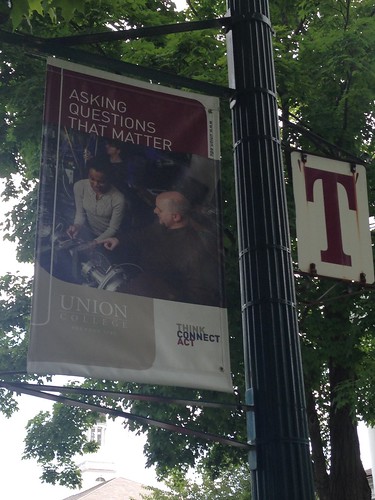
Union College has interdisciplinary studies, engineering and unique study abroad options

union campus engineering

Union College is known for its interdisciplinary studies and study abroad programs. To emphasize creativity in its engineering programs, Union supports STEAM (with arts). During my visit there, I was most impressed with the high rate of graduation for women in the sciences and engineering. Union has a rather unique program in Siberian Russia which combines Russian studies and environmental studies. Building on a strong sense of community, all faculty, staff, and students are assigned to a “house” which is a space for them with seminar room, programming and community. (Upperclassmen can live in the house.)

Here are a few quick facts about Union College:
Union College

Acceptance: 38%

Freshmen from out of state: 75%

Most popular majors: economics, biology, psychology

Housing: Guaranteed housing freshman year

4-year Graduation rate: 80%

Academics:  “Union has outstanding academics.” says a freshman. Union operates on a trimester system, which means thrice-a-year exams and a late start to summer jobs—but also the opportunity to concentrate on just three courses a term. The common curriculum has modern language requirements and 5 writing across curriculum courses within the 7 distribution areas. Engineering majors must declare by the end of freshman year – bio-, mechanical, electrical, or computer. Union also provides wonderful opportunities for students to study abroad. One program allows students to study for a term in Siberia, Russia, delving into Russian and environmental studies. The professors here at Union are simply wonderful.” says another student. Students can expect to see full professors at the lecterns rather than TAs. 

Social:  “The majority of social life is on campus,” says a student. Campus events also include comedians, concerts, and speakers. What Schenectady lacks can be found in Saratoga Springs, which boasts restaurants, jazz clubs, horse racing, and Skidmore College, or in the nearby Adirondacks and Catskills. Popular road trips include Boston, Montreal, New York, and the ski slopes of nearby Vermont. Union’s athletic teams compete in Division III, aside from men’s and women’s ice hockey, both of which are Division I. 

Financial: Although the tuition and fees are approximately $62,274, Union College offers grants and need-based financial aid, with the average need-based scholarship of $32,000. 100% of need is fully met, although the Union is need-aware. Union does not combine merit and need-based aid.

What do you think about this college? What else would you like to learn about it? Please post your comments below.

College Fit Finder: What does “College Fit” mean?

santa clara campus

During a recent talk to high schools, Peter V. Johnson, Dean of Undergraduate Admissions at Columbia University stated elegantly:

columbia-main-gate
Columbia University, where I almost attended!

“We do not admit statistics to an institution. We admit people to an educational community.”

His statement defines college fit which we have been hearing more and more about these days. Using a college fit finder can help students identify the best schools for their needs.

Student perspective on College Fit

There are 2 sides to this “college fit” coin. Dean Johnson intimates the importance of fit from the college’s side. On the other side of this coin, the student can select colleges based on fit. While I don’t have a pithy quote like Dean Johnson, I will share three aspects of college fit from the student’s side.

Three aspects of college fit that students can consider when developing their list of colleges are

  • Academic fit
  • Social/cultural fit
  • Financial fit

Questions to ask about these components may include:

  • Academic – Does this college have my major interest?
    What are the required courses for graduation?
    How long will it take me to graduate based on the course offerings and schedule?
  • Social/cultural – Will I fit in?
    Can I get the type of support I need within this campus community?
    What will I do on the weekends?
  • Financial – What available scholarships will make this college affordable for my family?
    What financial sacrifices must I make to graduate from this college?
    Am I OK with those financial sacrifices?

Students have the best chance of graduating on time when these areas of fit are considered up-front.

In the same way, colleges have the best chance of admitting students who will contribute to the quality of their communities when they ask the right questions about students upfront. If you want to see the questions that matter to a college, check out their essay questions. Those questions say a lot about the type of people they want to join their educational community!

Why choose a women’s college – Leadership and diversity

Smith College

When it comes to choosing the best college, many factors come into play—location, programs, campus culture, and more. For female students, one option that often gets overlooked is the idea of attending a women’s college. Historically, women’s colleges have played a significant role in educating and empowering women, and they continue to offer unique advantages today. Let’s explore why the best women’s colleges still rank highly and what makes them an excellent choice for many young women.

The Unique Experience of Women’s Colleges

One of my high school friends attended Smith College in Northampton, Massachusetts, and she often speaks about how transformative her college experience was. Over the years, as I visited Smith and other historically women’s colleges, I’ve realized just how special these institutions are. They offer a unique blend of academic rigor, leadership opportunities, and a supportive environment tailored specifically to the development of women.

When discussing the idea of attending a women’s college, the first reaction from many female students is often concern about the lack of male presence: “But I won’t see any guys!” This common misconception overlooks the fact that many women’s colleges, like Barnard College, are either part of or located near co-educational institutions, allowing for a diverse social environment while still offering the benefits of a women-centered education.

If you’re open to considering why the best women’s colleges are a great fit for many young women, take a moment to hear what Barnard’s President, Debra Spar, has to say:

What Women’s Colleges Offer: A Closer Look

Q: What does the Barnard experience offer for women? How does it compare to other American colleges?

A: The Barnard experience is both similar to and distinct from other colleges. On the surface, walking across Barnard’s campus feels like being at any top university, such as Harvard or Northwestern. It’s a vibrant, urban campus with a diverse student body that includes both men and women. However, when you dig deeper, you find that Barnard students enjoy the best of both worlds: they benefit from a co-ed environment but also thrive in a space where women take center stage.

At Barnard and other top-ranked women’s colleges, women are in the majority—not just in the classroom but also in leadership roles across campus. Whether it’s the student body president, club leaders, or other positions of influence, women occupy these roles. This dynamic fosters an environment where female students can develop intellectually and personally without the pressure of being “the woman in the room.” Instead of feeling the burden of representing a gendered perspective, they are free to express themselves as individuals, which can be incredibly empowering.

Q: Do women’s colleges have specific programs to encourage leadership?

A: Absolutely. Barnard, for instance, has the Athena Center for Leadership Studies, which is dedicated to helping young women realize their leadership potential. Unlike many programs that focus on inspirational aspects of leadership, Athena’s approach is hands-on. It teaches concrete skills that are essential for leadership in any field—whether it’s running a newspaper, a college, or a Fortune 500 company. The curriculum includes finance, negotiation, fundraising, and public speaking. While these aren’t “women’s skills,” they are essential leadership skills that women, statistically, may be less inclined to pursue. The Athena Center aims to bridge that gap, equipping women with the tools they need to succeed in any leadership role.

Why Consider Historically Women’s Colleges?

There are currently 60 women’s colleges across 24 states in the U.S., with Massachusetts alone home to eight of them. These institutions have a rich history of fostering female leadership, academic excellence, and social responsibility. They’ve produced generations of women who have gone on to become leaders in various fields, from business to politics to the arts.

Women’s colleges consistently rank highly for their strong academic programs, vibrant campus communities, and commitment to diversity and inclusion. Schools like Wellesley, Smith, Bryn Mawr, and Barnard are often mentioned among the best women’s colleges, offering a range of programs that rival those at co-educational institutions.

The Benefits of a Women’s College Education

1. Leadership Opportunities: At a women’s college, women lead—literally. From student government to clubs and organizations, female students are at the forefront, gaining valuable leadership experience that will serve them well in their careers and personal lives.

2. Tailored Academic Programs: Many historically women’s colleges offer specialized programs and centers that focus on women’s issues, leadership, and empowerment. These programs provide a unique lens through which students can explore their fields of interest.

3. Supportive Environment: The community at women’s colleges is often described as supportive and empowering. Students are encouraged to take risks, speak up, and take on challenges they might shy away from in a co-ed environment.

4. Diverse Social Environment: While women’s colleges are single-gender, many are located near co-ed institutions, offering students the chance to enjoy a diverse social life. Schools like Barnard and Wellesley have partnerships with nearby universities, allowing students to take classes and participate in activities across campuses.

5. Long-Term Benefits: Graduates of women’s colleges often report high levels of satisfaction with their education, citing the confidence, leadership skills, and lifelong friendships they developed during their college years.

There are 60 women’s colleges in 24 states in the US. (Massachusetts has 8 women’s colleges.) My hope is that more female college-bound students would be open to at least considering a campus visit at a women’s college. Here is a list of those colleges:

 ALABAMA
Judson College
 CALIFORNIA
Mills College
Mount St. Mary’s College
Scripps College
 COLORADO
Woman’s College of the University of Denver
 CONNECTICUT
Hartford College for Women
St. Joseph College
 DISTRICT OF COLUMBIA/ WASHINGTON, DC
Trinity University
 GEORGIA
Agnes Scott College
Brenau University  
Spelman College
Wesleyan College
 ILLINOIS
Lexington College
 INDIANA
St. Mary’s College
St. Mary-of-the-Woods College
 KENTUCKY
Midway College
 MARYLAND
College of Notre Dame
 MASSACHUSETTS
Bay Path College
Lesley University
Mount Holyoke College

Pine Manor College
Regis College
Simmons College
Smith College

Wellesley College
 MINNESOTA
College of St. Benedict
College of St. Catherine
 MISSISSIPPI
Mississippi University for Women
 MISSOURI
Cottey College
Stephens College
 NEBRASKA
College of St. Mary
 NEW JERSEY
College of St. Elizabeth
Douglas College of Rutgers University
Georgian Court College
 NEW YORK
Barnard College
College of New Rochelle
Russell Sage College
Wells College
 NORTH CAROLINA
Bennett College
Meredith College
Peace College
Salem College
 OHIO
Ursuline College
 PENNSYLVANIA
Bryn Mawr College
Carlow College
Cedar Crest College
Chatham College
Moore College of Art and Design
Rosemont College
Wilson College
 SOUTH CAROLINA
Columbia College
Converse College
 TEXAS
Texas Woman’s University
 VIRGINIA
Hollins University
Mary Baldwin College
Sweet Briar College
 WISCONSIN
Alverno College
Mount Mary College

via Women’s Colleges in the United States.

Find the College That Cares About You

As seniors are narrowing down their list of colleges, I urge them to seriously consider those colleges that are a good fit for them. Applying to those colleges that are a good fit for you gives you the best opportunity to attend the college that cares about you and where you will thrive and graduate!

“Good fit” colleges (note: plural) will match these criteria:

• Offers the course of study you want to pursue—and will provide opportunities for you to explore if you are undecided;

• Provides instruction and learning opportunities in a manner that is compatible with the way you like to learn;

• Is a good match for your level of ability and academic preparation; and

• Provides a community that feels like home

Ultimately . . .

—the ideal college—will also be the place that values you for what you have to offer!

Think about it. Wouldn’t you prefer to be at a college that recognizes your talents and abilities, interests, and perspectives—and demonstrates its commitment to investing in your success?

via The Best College? The One That Values You – The College Admissions Insider usnews.com.

During the recruitment process, college-bound students should look for these indicators that the college values your candidacy:

• Give you personal attention throughout the recruitment process;

• Answer your questions about housing, registration, and payment plans in a timely manner;

• Provide financial aid to meet your need; and

• Recognize your talents with scholarships and/or special academic opportunities i.e., study abroad, internships, research, etc.

via The Best College? The One That Values You – The College Admissions Insider usnews.com.

Invest in yourself by choosing the college that cares about you and provides the support you need to succeed.

Watch for these signs as they will tell you a lot about how you’ll be treated as an enrolled student!

More interesting posts to check out:

How to get into the University of Chicago

Please sign up for our monthly newsletter . . . Great stuff!

How to Get into the University of Chicago

University of Chicago

The University of Chicago is one of the most prestigious universities in the United States, and last year, it received far more applications than the 1,400 students it admitted. With such a competitive admissions process, potential applicants might wonder how hard it is to get into the University of Chicago.

While gaining admission can be challenging, it’s certainly possible if UChicago is the right fit for you. Visiting the campus and understanding its unique academic environment is a great first step to determine if it aligns with your goals.

As someone who has lived on the UChicago campus and recently revisited it to better understand it from a student’s perspective, I’ve gathered some valuable insights that can help you strengthen your application.

Here are four essential tips on how to get into the University of Chicago:

Getting into The University of Chicago

  1. Understand the Importance of the Common Core
    The University of Chicago is renowned for its rigorous academic structure, heavily influenced by its Common Core curriculum. Unlike other universities where you might have more freedom in choosing courses from the start, UChicago requires all students to engage deeply with the Core, which shapes much of the intellectual culture on campus. To improve your chances of admission, familiarize yourself with the Common Core and reflect on how this approach aligns with your academic interests. Demonstrating this understanding in your application can set you apart.
  2. Complete the Chicago Supplement Thoughtfully
    UChicago is a member of the Common Application, but it also has its own unique set of essay prompts known as the Chicago Supplement. Even if you are using the Common Application, it’s crucial to pay special attention to this supplement. The essays are your opportunity to showcase your personality, intellectual curiosity, and how you might contribute to the UChicago community. Avoid simply listing achievements or activities; instead, write engaging, well-structured essays that reveal who you are as a person.
  3. Re-Take the SAT/ACT if Necessary
    If you’re wondering, is UChicago test-optional?—the answer is yes, as UChicago has adopted a test-optional policy. However, if you choose to submit standardized test scores and believe you can improve your SAT or ACT results, consider re-taking the exam. UChicago superscores, meaning they will consider your highest section scores across multiple test dates. Submitting strong scores can still bolster your application, even though they’re not required.
  4. Express Yourself Authentically in Your Essays
    The University of Chicago places a significant emphasis on the essays in its holistic application review process. This is your chance to let your unique voice shine. Use this space to share your story, your passions, and what drives you. The admissions team wants to understand who you are beyond your transcript and test scores, so make sure your essays are personal and reflective of your individuality.

University of Chicago

In addition to its academic rigor and distinctive Common Core curriculum, UChicago offers a vibrant campus life with over 400 student organizations. Whether you’re interested in joining the quirky Zombie Readiness Task Force, playing broomball, or perhaps starting your own quidditch team, there are countless ways to get involved and build a community.

By following these tips and presenting a well-rounded application, you’ll improve your chances of joining the intellectually stimulating environment of the University of Chicago. Good luck!

Ohio University in Athens for the Summer and Academic Year

Ohio University in Athens

Who knew it would be so difficult to find on-campus parking at Ohio University in Athens . . . in the middle of the summer? My tour guide stated that this summer was unusually busy on campus and likely due to students taking courses in preparation for the university changeover from quarters to semesters. The 2011-12 academic year will be the last year that Ohio University is on the quarter system.

IMG_0072
Photo of the student center at Ohio University

In addition to enrolled students taking courses this summer, there are 3 other cohorts on campus:

  • International students – I saw a lot of international students. I was surprised to see so many international students since there is a relatively small international community during the academic year (less than 8%). In fact, only about 17% of their student body are non-Ohio residents.
  • Rising Freshmen – OU encourages its freshman students in the Honors College to begin in the summer session. Those students participate in smaller learning communities. Administrators noted that the summer session is a program to help students transition to college and hopefully improve retention. The most recent graduation rate for OU is 69.7%.
  • Middle and high school students – There are a host of summer programs on OU’s campus for both day and residential students. Nike hosts several sports camps there each year. Additionally, OU hosts its own summer program for high school students. During my visit, I met with the directors of the summer programs and they have been fine-tuning this program since its inception. I will be meeting with them again during the academic year to learn more about upcoming changes.

As rising juniors and seniors are traveling this summer, I encourage them to take advantage of opportunities to visit area campuses. Even if you visit a campus that may not be of interest, you can still learn a lot about available options and make comparisons. When I use the term “area” I am referring to those campuses that are near your home or proximal to where you’re already traveling. I am not suggesting that families make special distant trips just for the sake of visiting – that can be very costly and time-consuming. Campus visits should be done more thoughtfully and strategically than that.

Please listen to our radio show on-campus visits and get more information about how you can make the most of your campus visits.