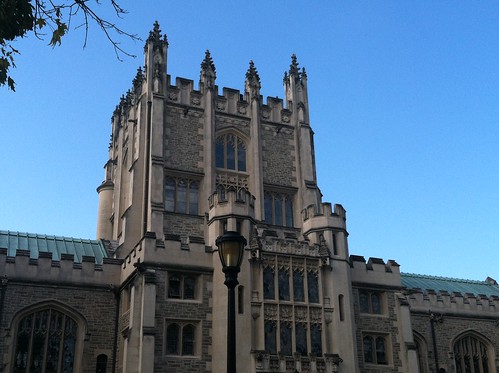
Furman offers internships and research in all-residential community

Furman is a small, liberal arts college located in Greenville, SC that takes advantage of its size and location. The 2,700 undergraduates have access to faculty-mentored research projects and all faculty serve as advisors. The largest class at Furman has only 32 students. Over two-thirds of Furman students participate in internships, often with the 200+ companies in the local area. As a 100% residential campus, students can build long-lasting friendships throughout their undergraduate years.

Two Furman programs worth noting are the 5-year program in Education and another in Chemistry.

 

Acceptance: 65%

Freshmen from out of state: 72%

Most popular majors: Political science, Health Sciences, Business Administration

Housing: Furman is 100% residential, which means that all students live on campus all 4 years. They fondly describe their housing system as “7 years of friendships”!! Varied housing options on campus include apartments and eco-housing for sustainable living.

4-year Graduation rate: 79%
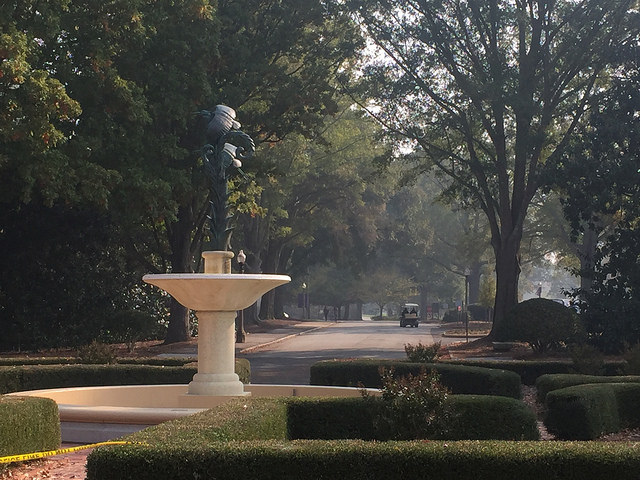
Academics:  Furman’s Health Sciences major is particularly strong for its pre-med students. Furman’s program helps pre-med students with getting all of their non-academic requirements for a competitive medical school applications – research, internships and community service. Pre-med majors also get assistance with MCAT and medical school applications.

Furman offers a May immersion experience with 2-credit courses. Undergraduate research opportunities start in the summer after freshman year with a faculty mentor.

Many Furman students graduate with a minor. The most popular minor is Poverty Studies. The fastest growing major is currently Sustainability Science.

Social: Participation in campus life is encouraged through 4 required “cultural life” points per semester. There are 200+ cultural life activities a year, so it’s rather easy for students to get credit for taking advantage of all the fun and interesting events.

Financial: Furman offers merit aid and need-based financial aid, with 80% of need met, towards the cost of attendance, which is around $64,000. Furman’s merit scholarships do not require test scores to qualify.

What do you think of Furman? What do you think of test-optional scholarships? Please post your comments below.

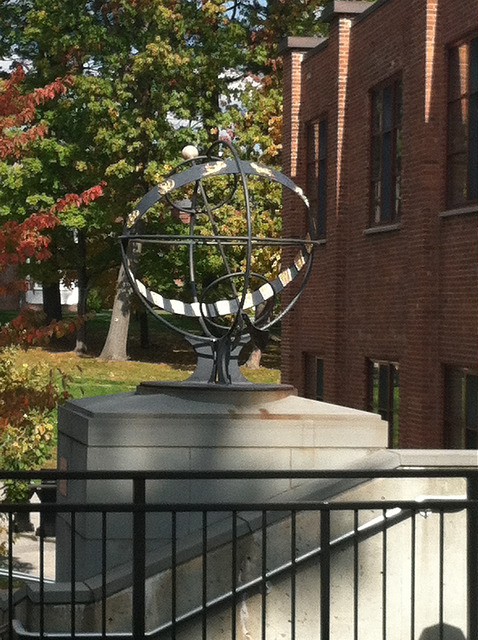
Vassar has an independent, interdisciplinary and creative spirit

Vassar is a highly selective, small, coeducational liberal arts college, located just 70 miles north of New York City and known for its liberal traditions. Vassar prides itself on curricular flexibility, tolerance, and diversity.vassar liberal arts college

Multidisciplinary studies have been a distinctive feature of academic life at Vassar for several decades, fostering an intellectual environment that thrives on crossing disciplinary boundaries. A great example of this academic freedom and mindset is the Interdisciplinary Robotics Research Laboratory, created by five professors in biology, psychology and computer science where students can investigate with physical robots as well as computer simulations of virtual robots.

The college’s 1,000-acre campus, just outside Poughkeepsie, New York, is decorated with architecture which is predominantly neo-Gothic and yes, the library does look like a scene out of Harry Potter.

Acceptance: 26%

Freshmen from out of state: 71%

Most popular majors: economics, English, psychology

Housing: Guaranteed housing all four years

4-year Graduation rate: 88%

Vassar College

Academics: Vassar began as a women’s college in 1861 and went coed in 1968. There is no core curriculum and no general education or distribution requirements. Academic flexibility is paramount. That said, all students must take a Freshman Course, a small seminar emphasizing oral and written expression, as well as one course that requires significant quantitative analysis (similar to Hamilton College, also in New York).

More than half the students at Vassar double-major, with the most popular majors being English, political science, psychology, economics, and biological sciences. 70% of Vassar students go to graduate school, with medical school being the largest percent. Absolutely love that all freshmen have their own librarian.

Social: Vassar doesn’t have a Greek system, so social life revolves around films, lectures, parties, concerts, and the like. With its strong theatrical department, Vassar has 50+ theatre productions per year. A senior remarked that, “There are more than 1,000 events registered on the campus every year, which is nearly 40 events a week.”  Student Association, WVKR radio station, Vassar Greens, and ultimate Frisbee are influential in student social life. Popular events include Spring Concert, Founder’s Day, and All Campus Halloween Party.

Financial: Vassar offers merit scholarships and need-based financial aid, with 100% of need fully met.  The average financial aid package is $45,000 and 60% of students receive awards. Interestingly, the family income of students who received financial aid ranged from $0 to $270,000.

What do you think of Vassar? What about this college is a good fit? Please post your comments below.

Vanderbilt beyond beautiful campus: A great fit for engineering, research, community, study abroad and foodies

Vanderbilt University

Vanderbilt University, the smallest and only private college in SEC conference, offers 68 undergraduate majors across four schools and colleges: the College of Arts and Science, School of Engineering, Peabody School of Education and Human Development, and Blair School of Music. Students apply to a school. Each school is special in its own way and worth highlighting further. Students in the College of Arts and Science can design their own major. There are 8 tracks in the School of Engineering and students choose 3 of those tracks in which to take courses during their freshman year. The Organization Development major in the Peabody School requires an off-campus internship either in 2nd semester junior year or first semester of senior year. Since the Blair School only has an undergraduate program and is NOT a conservatory, students earn their degree through another school.

Prospective students usually fall in love with the Vanderbilt campus. Its park-like campus is located in the heart of Midtown, surrounded by restaurants, shops, and cultural destinations. There are, in fact, over 80 restaurants within walking distance of the campus. (Foodies beware!) On the main campus, art and sculptures dot the landscape and architectural styles range from Gothic to modern glass and brick.

Vanderbilt University

Don’t let the beautiful campus fool you, though. . . .Vanderbilt is still one of the most selective colleges in the US. Check out their acceptance rate and these additional quick facts about Vanderbilt:

Acceptance: 8.8%

Freshmen from out of state: 89%

Most popular majors: social sciences, engineering, interdisciplinary studies (No wonder with the flexibility students have to double-major across schools.)

Housing: 86% of undergraduates live in the dorms. All freshman live together which can be a plus for meeting new friends and building a tighter class community.

4-year Graduation rate: 84%

Academics: Vanderbilt’s study abroad program attracts 35 percent of students and offers the chance to spend a summer, a semester, or a year on one of six continents through 130 programs. There’s even a May-mester option to study abroad, so no excuse for students not to take advantage of this amazing opportunity. An interdisciplinary approach to learning is embraced and undergrads are encouraged to take classes across all four schools. From their first year, undergraduates can get involved with cutting-edge research with world-renowned faculty and participate in internships. Keep in mind, though, Vanderbilt does not offer a “co-op” program.

Social: Vanderbilt students have remarked that “Nashville is so much fun,” and “The list of excellent restaurants, bars, shopping, and live music venues is endless.” In addition to the 500+ student clubs, over half of undergraduate women participate in sororities and 30% of the guys. Although many Greek parties are open to the entire campus, the strong participation in Greek life may suggest that Vanderbilt is not be the best fit if a teen is not interested in Greek life.

Vanderbilt has a long tradition of community service, starting an “alternative spring break” as far back as the 70s. Today, an impressive 75% of students participate in community service.

Financial: Vanderbilt offers university grants and need-based financial aid, with 100% of need fully met.  Their financial packages do not include loans (hooray!). Thus, Vanderbilt’s offers include only gift monies and a small amount of expected student employment.

What do you think of Vanderbilt? What about this college is a good fit? Please post your comments below.

Oberlin: Funky intellectual community with lots of music, art and co-ops

Oberlin has a distinct history of challenging intellectual and social conventions. It was the first to adopt a policy to admit students of color and the first to educate women in an undergraduate program. This history shapes the diverse student experience today. Individuality is valued at Oberlin, which fosters strong bonds among an eclectic community of bright and talented students from around the world. Interestingly enough, much of the domestic student body hails from New York and California.oberlin music

Oberlin is an intellectual community where students explore ideas because they are inspired to learn, not for the sake of grades. Since 1920, more Oberlin graduates have earned Ph.D.s than have graduates of any other predominately undergraduate institution. Wow!

Acceptance: 33%

Freshmen from out of state: 95%

Most popular majors: politics, biology, music

Housing: All freshmen live on campus. Only seniors can live off-campus. The varied housing options include co-ops, several of which focused on foreign languages. For $5, students can rent up to two original works of art to decorate their room (what a deal!). Every dorm has a piano.

4-year Graduation rate: 73%

Academics: Oberlin has been a leader among liberal arts colleges that promote their science offerings, with biology and chemistry being two of their strongest departments. Undergraduates can also major in interdisciplinary programs like neuroscience and biopsychology.

There is no core curriculum but students must take classes humanities, social sciences and natural sciences. Oberlin offers a winter term, which allows independent study in January. Undergrads must complete 3 winter terms to graduate.  75% study abroad and 65% engage in research with faculty mentors.

A nice perk to having a conservatory on campus is that private lessons are free when you take a music class for credit.

Social: Music is big on Oberlin’s campus. My tour guide boasted that there are 2-3 music events held on campus every day. Some of the most popular events feature music performances, such as orchestra concerts, jazz ensemble concerts, opera and theater productions, Friday Night Organ Pump concerts, and Hip Hop Conference. Student radio is the second largest organization. Students actively participate in 200 student groups and 70% engage in service projects.

Oberlin College & Conservatory

Financial: Oberlin offers merit aid and need-based financial aid, with 100% of need fully met.  Although the tuition and fees are $67,000, the average financial aid package is $37K. 83% of students receive scholarships. Oberlin offers both need-based and merit aid. Oberlin meets 100% of need.

What do you think about Oberlin? What about this college is a good fit for you? Please post your comments below.
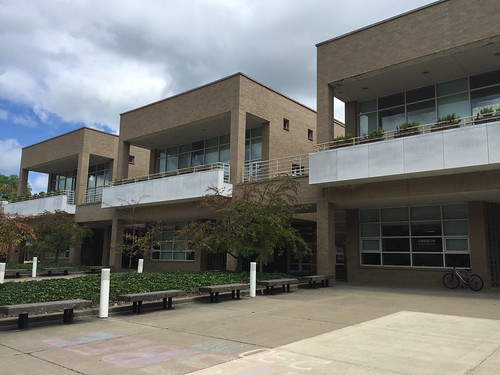
Union College has interdisciplinary studies, engineering and unique study abroad options

union campus engineering

Union College is known for its interdisciplinary studies and study abroad programs. To emphasize creativity in its engineering programs, Union supports STEAM (with arts). During my visit there, I was most impressed with the high rate of graduation for women in the sciences and engineering. Union has a rather unique program in Siberian Russia which combines Russian studies and environmental studies. Building on a strong sense of community, all faculty, staff, and students are assigned to a “house” which is a space for them with seminar room, programming and community. (Upperclassmen can live in the house.)

Here are a few quick facts about Union College:
Union College

Acceptance: 38%

Freshmen from out of state: 75%

Most popular majors: economics, biology, psychology

Housing: Guaranteed housing freshman year

4-year Graduation rate: 80%

Academics:  “Union has outstanding academics.” says a freshman. Union operates on a trimester system, which means thrice-a-year exams and a late start to summer jobs—but also the opportunity to concentrate on just three courses a term. The common curriculum has modern language requirements and 5 writing across curriculum courses within the 7 distribution areas. Engineering majors must declare by the end of freshman year – bio-, mechanical, electrical, or computer. Union also provides wonderful opportunities for students to study abroad. One program allows students to study for a term in Siberia, Russia, delving into Russian and environmental studies. The professors here at Union are simply wonderful.” says another student. Students can expect to see full professors at the lecterns rather than TAs. 

Social:  “The majority of social life is on campus,” says a student. Campus events also include comedians, concerts, and speakers. What Schenectady lacks can be found in Saratoga Springs, which boasts restaurants, jazz clubs, horse racing, and Skidmore College, or in the nearby Adirondacks and Catskills. Popular road trips include Boston, Montreal, New York, and the ski slopes of nearby Vermont. Union’s athletic teams compete in Division III, aside from men’s and women’s ice hockey, both of which are Division I. 

Financial: Although the tuition and fees are approximately $62,274, Union College offers grants and need-based financial aid, with the average need-based scholarship of $32,000. 100% of need is fully met, although the Union is need-aware. Union does not combine merit and need-based aid.

What do you think about this college? What else would you like to learn about it? Please post your comments below.

Is Occidental College a Good School? Let’s Find OUt

Occidental College

Minutes outside of downtown Los Angeles, Occidental College is tucked away in a beautiful campus full of trees and flowers. Even more colorful than Oxy’s environment though is its school culture: energetic, socially conscious, supportive, and motivated.

Here are a few quick facts about Occidental:

Acceptance: 42%

Freshmen out of state: 43%

Most popular majors: Diplomacy and World Affairs, Economics, Politics, Science, Urban and Environmental Policy, Theater, Art History and Visual Arts

Housing: Required for freshmen, sophomores, and juniors

4-year Graduation rate: 78%

Occidental College

Academics: Classes stay small at Occidental, and students and professors build strong relationships quickly. Because so many students are motivated in diverse fields, Oxy provides its students with a number of special programs and encourages learning experiences outside of the classroom. For students interested in international relations, Oxy has a unique program with the United Nations, unlike any other offered.

Social: Having L.A. in your backyard is nice, and free vans can get you downtown or on the beach in ten minutes. But Oxy’s campus usually brings a lot of its own excitement on the weekends too. Spirited games, concerts, dances, parties, and Greek functions are all available for students.

Financial: Oxy offers need-based financial aid, grants, and merit scholarships. 100% of the need is met. Although the tuition and fees are $63,901, the average financial aid package is $42,541. 81% of students receive grants and 11% receive merit scholarships.

Motto: “Occident Proximus Orienti” – The West is nearest to the East

What do you think about this college? What else would you like to learn about it? Please post your comments below.
Is it too soon for a Campus Visit?

Parents ask me all the time “Is it too soon to go on a campus visit?” Unfortunately, the parents who usually ask that question are indeed asking too soon. There is such thing as too soon for campus visits because too many students get burned out on-campus visits when they start their visits well before the application process.

Campus visits matter most in junior and senior year of high school. When students are visiting colleges at a time when it’s relevant then they tend to learn more from the experience. Also, for colleges that track “demonstrated interest”, having an official visit during that time can help with admissions prospects. The other benefit of visiting when students are actively engaged in the application process is that the visit helps with writing a more compelling essay about why that particular college is a good fit.

Rice campus
Rice has a beautiful campus, much like an urban oasis!

There are a few colleges that may host special events for 9th or 10th graders. I think those visits are OK to attend, perhaps as part of a family trip to that area. I don’t suggest making a special trip out of the way just to attend.

What I see more often is that parents are taking their middle schooler or 9th grader to visit the more prestigious, selective universities. That adds a lot of unnecessary pressure and stress. Yes, Princeton may have a beautiful campus, but is it really necessary to visit when it’s not even certain that Princeton is a good fit for your teen? It can even be a bit tricky when a parent takes their child to a reunion event. That too can set the expectation that your child should attend or at least apply to your alma mater.

The best time for students to visit in the winter and spring of the junior year after researching where it makes the most sense to visit. The summers are good for visits, but families should keep in mind that the campus vibe may be a bit quieter and less impressive. Some colleges offer special overnight visits for seniors. These are great to take advantage of but it can be hard to fit into the senior schedule, especially if a teen has a fall sport.

So the short answer to our initial question on is it too soon to do a campus visit is “Yes!” If your teen is a middle schooler or 9th grader, it’s too soon for a campus visit. Those years are better spent doing well academically and making good choices socially. The end of sophomore year is the earliest I would recommend a campus visit.

When are you starting your campus visits? Please post comments below.


Why Johns Hopkins isn’t just for pre-meds, anymore

Motto: “The truth shall set you free” (Veritas vos liberabit)

The first research university in America, Johns Hopkins prides itself on motivation, collaboration, and a restless intellectual vitality. The main campus is nicely situated in a Baltimore neighborhood but balances the city-feel with numerous quads and classic-style buildings. and clear parameters. During my recent visit, I was impressed with the way the university had transformed its campus into more communal spaces where students could work collaboratively. What a way to build a strong community!

Here are a few quick facts about Johns Hopkins every applicant must know:

Acceptance: 11.5% (close to 50/50 ratio men to women)

Freshmen from out of state: 88%

Most popular majors: public health studies, international studies, biomedical engineering

Housing: Freshmen and sophomores are required to live on campus

4-year Graduation rate: 82%

IMG_3990
Johns Hopkins Homewood campus is in Baltimore with easy access to all the city has to offer.

Academics: Although its had a strong pre-med reputation for years, Johns Hopkins is actually more diverse than you may realize.  A diverse curriculum through nine divisions, curious students, and passionate teachers create Johns Hopkins’ unique educational experience. And a 2-week intersession during January keeps the learning fun and unique!

Social: Students are provided with a whole host of social outlets on and off campus. Over 350 clubs and organizations keep students active throughout the year, but the annual Spring Fair gets the school ecstatic and draws the local community in as well. With being in Baltimore there are also many ways that students can get involved in community service. . . .free public transportation helps too!

Financial: Johns Hopkins offers need-based financial aid and grants. 100% of need is fully met. Although the tuition and fees are $66,197, the average financial aid package is $37,931. 69% of students receive scholarships.
What do you think about this college? What else would you like to learn about it? Please post your comments below.


What to Wear to a College Fair or Campus Visit

If the title of this article captured your attention, you are asking a great question, “What should I wear to a college fair?” or “What should I wear to this campus visit?” The answer is not always obvious based on what I see teenagers (and sometimes their parents) wearing to these events.

NOT

Here are some quick tips and I will start with what not to wear:

  • Cut-off jeans
  • Shirts with the backs cut out
  • Graphic T-shirts with obscene or explicit language/images
  • Heels that are 6 inches high (when your feet hurt, it’s hard to listen!)

Hopefully, these brief tips do not leave you saying “I need to go shopping!”

YES

Here are a few suggestions for what you can wear:

  • Comfortable, clean shoes
  • A collared shirt
  • Pants, belted at the waist, i.e. not sagging
  • Jeans are OK as long as they are worn neatly!

A good rule of thumb if you’re still wondering  . . . . when in doubt, dress up! 

Which fairs will you visit? Safe travels and be sure to take our comparison checklist with you to make sure you make the most of a college fair!

wear


Teen traveling for summer camps?

Charlottesville Summer Camp

As a parent of 1 pre-teen and 2 teenagers, I sometimes feel like my entire spring is spent planning their summer camps. Finding a camp that fits well with our summer goals is actually not so hard. The most time-consuming aspect is figuring out all the travel arrangements for residential programs. It is not always possible for my husband or me to travel with them. So figuring out the Unaccompanied Minor policies can take the better part of several weeks. For example, my younger son is participating in a program in Virginia. I was so excited to find a ticket into Charlottesville for about $150. I was ready to book the ticket when I realized that their age minimum to fly as an adult is 15. For my well-traveled 13-year-old, there would be an additional fee of $100 and the flight must be non-stop!! Yikes! Where can you fly non-stop on US Airways? Certainly not to Charlottesville, VA, unless it’s already in driving distance.

To save families some time on figuring out the unaccompanied minor airline policies, here is a summary:

American Airlines:

Children 8 through 11 years of age must travel with another passenger at least 16 years of age or they will be considered Unaccompanied Minors. For travel on American Airlines, American Eagle, and AmericanConnection unaccompanied children may travel on nonstop, direct and connecting flights. If the itinerary includes a connection to/from another airline, including codeshare and oneworld partners, the unaccompanied children will not be accepted.

Children 12 through 17 years of age – Use of the Unaccompanied Minor service is not required, but is available upon request.

via American Airlines Offers Information For Traveling With Children And Infants On AA.com

Delta:

The Unaccompanied Minor Program ($100 fee) is required for all children 5-14 years old when traveling alone. Ages 5-7  can only travel on nonstop flights. Ages 8-14 can travel on nonstop and connecting flights. The program is optional for children age 15 – 17.

via Children Traveling Alone

Southwest:

Children ages five through 11 traveling without an accompanying Passenger age 12 or older must travel as an Unaccompanied Minor (UM) on Southwest Airlines. Southwest will charge $50 each way ($100 roundtrip) in addition to the air fare per child for UMs to travel.

via Unaccompanied Minor

United:

Children 5 to 11 years of age who are not accompanied by  someone who is at least 18 years of age on the same aircraft are considered unaccompanied minors. Ages 5 to 7 may only travel on nonstop flights. Ages 8 to 11 may travel on any flight (nonstop or connecting) operated by United or United Express. However, travel will not be allowed on the last connecting flight of the day — unless the connecting flight is the only published service to that destination. Unaccompanied minors are not accepted on flights which require an overnight stay in order to make a connection.

via United Airlines – Children traveling alone

Virgin America:

Children 5-14 may travel unaccompanied on non-stop flights only. Virgin America assistance is required. Young adults 15 through 17 are considered adults unless the parents or guardians wish unaccompanied minor services to be provided by Virgin America. The charge for Unaccompanied Minor service is $75 for short-haul flights (flights less than 2 hours in duration), $100 for long-haul and medium-haul flights (flights more than 2 hours in duration), or $125 for International flights on Virgin America (arriving or departing from Mexico).  Unaccompanied Minor reservations cannot be made online.

via How can my child travel unaccompanied?

Where is your student going this summer?


Enhanced by Zemanta