Vanderbilt University, the smallest and only private college in SEC conference, offers 68 undergraduate majors across four schools and colleges: the College of Arts and Science, School of Engineering, Peabody School of Education and Human Development, and Blair School of Music. Students apply to a school. Each school is special in its own way and worth highlighting further. Students in the College of Arts and Science can design their own major. There are 8 tracks in the School of Engineering and students choose 3 of those tracks in which to take courses during their freshman year. The Organization Development major in the Peabody School requires an off-campus internship either in 2nd semester junior year or first semester of senior year. Since the Blair School only has an undergraduate program and is NOT a conservatory, students earn their degree through another school.

Prospective students usually fall in love with the Vanderbilt campus. Its park-like campus is located in the heart of Midtown, surrounded by restaurants, shops, and cultural destinations. There are, in fact, over 80 restaurants within walking distance of the campus. (Foodies beware!) On the main campus, art and sculptures dot the landscape and architectural styles range from Gothic to modern glass and brick.
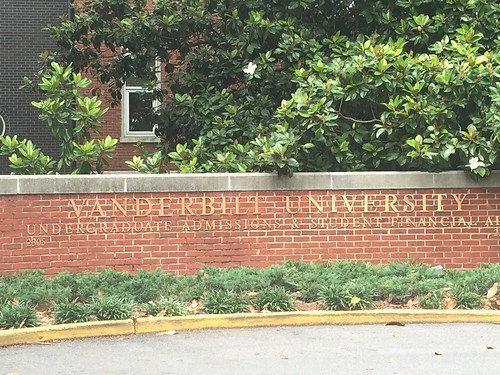
Don’t let the beautiful campus fool you, though. . . .Vanderbilt is still one of the most selective colleges in the US. Check out their acceptance rate and these additional quick facts about Vanderbilt:
Acceptance: 8.8%
Freshmen from out of state: 89%
Most popular majors: social sciences, engineering, interdisciplinary studies (No wonder with the flexibility students have to double-major across schools.)
Housing: 86% of undergraduates live in the dorms. All freshman live together which can be a plus for meeting new friends and building a tighter class community.
4-year Graduation rate: 84%
Academics: Vanderbilt’s study abroad program attracts 35 percent of students and offers the chance to spend a summer, a semester, or a year on one of six continents through 130 programs. There’s even a May-mester option to study abroad, so no excuse for students not to take advantage of this amazing opportunity. An interdisciplinary approach to learning is embraced and undergrads are encouraged to take classes across all four schools. From their first year, undergraduates can get involved with cutting-edge research with world-renowned faculty and participate in internships. Keep in mind, though, Vanderbilt does not offer a “co-op” program.
Social: Vanderbilt students have remarked that “Nashville is so much fun,” and “The list of excellent restaurants, bars, shopping, and live music venues is endless.” In addition to the 500+ student clubs, over half of undergraduate women participate in sororities and 30% of the guys. Although many Greek parties are open to the entire campus, the strong participation in Greek life may suggest that Vanderbilt is not be the best fit if a teen is not interested in Greek life.
Vanderbilt has a long tradition of community service, starting an “alternative spring break” as far back as the 70s. Today, an impressive 75% of students participate in community service.
Financial: Vanderbilt offers university grants and need-based financial aid, with 100% of need fully met. Their financial packages do not include loans (hooray!). Thus, Vanderbilt’s offers include only gift monies and a small amount of expected student employment.
What do you think of Vanderbilt? What about this college is a good fit? Please post your comments below.