Summer College Programs for High Schoolers

When it comes to preparing for college, the summer months offer an invaluable opportunity for high school students to explore academic interests, build skills, and gain experiences that will set them apart in the competitive college admissions process. Whether you’re certain about your intended major or still exploring options, summer college programs for high schoolers provide a structured environment to dive deep into subjects, experience campus life, and meet peers from around the world.

Why Consider Summer College Programs?

Summer programs are not just for students who have already decided on a college major. In fact, the most popular major among college freshmen is “Undecided.” It’s perfectly normal for high school students to be unsure about what they want to study in college. The key is to use the summer to explore different fields and discover what truly excites you. There are numerous programs available that cater to a wide range of interests, from STEM to the humanities, and even community service.

Summer Programs for “Undecided” College-bound Teens

If you’re unsure about your major or want to explore different fields, there are many summer programs that cover a broad range of topics through courses, cultural immersion, and community service. These programs allow you to try something new and get a sense of what you might like or dislike, helping you make a more informed decision about your future studies.

For example:

  • Wake Forest Summer Immersion Institute offers a variety of programs focused on specific majors, but also provides general programs in health & well-being, leadership, technology, and writing for life.
  • Putney Student Travel allows students to study abroad or participate in community service, with options for language learning and studying on a college campus.
  • Northwestern College Prep Program offers two-week courses with access to professors in both in-person (IN FOCUS) and virtual (E FOCUS) formats.
  • LEAD Global Summer Institute is a hybrid program that equips participants to “think differently” about learning, blending online and in-person experiences.

How to Find the Right Summer Programs for College-bound Teens in 4 Easy Steps

Finding the right summer program can take time, but it’s a crucial step in preparing for college. Here are four easy steps to guide you through the process:

1. Set a Goal

Start by setting 1-2 goals for the summer. This will help you be intentional in considering the best use of your talents and time. Examples of summer goals might include:

  • Meeting new friends from around the world
  • Reading books on topics that interest you
  • Taking a course not offered at your school
  • Learning more about a career you’re interested in
  • Gaining more community service hours
  • Experiencing life away from home through residential programs

By having clear goals, you’ll be better equipped to choose a program that aligns with your interests and future aspirations.

2. Use Criteria to Narrow Down Your Options

With so many options available, it’s important to use specific criteria to narrow down your choices. Consider the following:

  • Rising 10th Graders: Explore a new topic to broaden your horizons.
  • Rising 11th Graders: Delve deeper into a field of study or career interest.
  • Rising 12th Graders: Focus on programs that connect you with colleges, perhaps even incorporating a summer campus visit.

These criteria will help you find programs that are not only interesting but also strategically beneficial as you prepare for college.

3. Conduct a Targeted Search

The internet is a vast resource, but searching for summer programs can quickly become overwhelming. To make the process more manageable, conduct a narrow search with specific terms related to your interests. For instance, if you’re interested in engineering and math, try searching “engineering math summer high school programs.” This approach will yield more relevant results and help you find programs that match your goals.

It’s also worth noting that some summer programs are held on college campuses but may not be directly affiliated with the university or its admissions office. Be sure to check the details of the program to understand its relationship with the host institution.

4. Assess the Value of the Program

Before applying to any summer program, evaluate whether it’s worth your time and effort. Programs that don’t require any documents from students might not offer the same level of rigor or benefit as those that do. Look for programs that require transcripts, teacher recommendations, test scores, and essays. The application process itself can be a valuable experience, similar to what you’ll encounter when applying to college.

Additional Tips for Choosing the Right Summer Program

  • Explore New Interests: If you’re undecided about your major, consider a program that offers a variety of courses. This will give you a chance to explore different fields and discover what you enjoy most.
  • Consider Location and Duration: Some programs may be located on college campuses, while others might involve travel abroad. Think about how far you’re willing to travel and how long you want to be away from home.
  • Look for Balance: While it’s important to challenge yourself academically, don’t forget to consider programs that also offer opportunities for relaxation and fun. Summer should be a time to grow, but it should also be enjoyable.

Conclusion: Making the Most of Summer College Programs for High Schoolers

Summer programs are an excellent way for high school students to explore potential college majors, gain new experiences, and prepare for the challenges of higher education. Whether you’re certain about your future path or still exploring options, these programs provide a valuable opportunity to learn and grow.

By following these steps and considering your goals, you can find the right summer program that not only aligns with your interests but also enhances your college application. So, start your search early, set clear goals, and choose a program that will help you make the most of your summer.


Get the Best Teacher Recommendation Letters for College

How to Ask for a Teacher Recommendation Letter | Compass College Advisory

One of the qualities that every junior should develop is networking/building relationships with peers and adults. Teachers are important adults both inside and outside the classroom. Junior year is an important time for students to continue developing relationships with teachers. Teacher relationships are important because it is highly likely that the teachers from junior year will be writing recommendation letters for college. Understanding how to ask a teacher for a letter of recommendation is a crucial part of this process.

How to Ask for a Teacher Recommendation Letter

Here are my top 3 tips for how juniors can build good relationship with their teachers:

  1. Meet after school to ask questions and discuss lessons from class. These meetings should be sincere in that students are making an effort to meet with those teachers that they want to get to know or have an interest in their subject area.
  2. Review graded exams or assignments with teachers. This extra action will help not only with building a relationship with you teachers but also help with learning the content better. I especially encourage students who may need extra help with written assignments to meet with the teacher afterwards to understand how to improve their writing.
  3. Request a recommendation for summer program. Applying to a summer program is a low risk way to find out if a teacher can write a strong letter of recommendation for a student. In the past, I have actually had students request a recommendation for a summer program and they were denied acceptance because the teacher didn’t submit the recommendation letter. That was a good lesson for the college applications. The student learned that they should perhaps allow more lead time and/or ask a different teacher!

The wonderful thing about high school teacher relationships is that they often last for years. It’s common for students to go away to college but still return to visit their high school teachers during breaks. I recently had dinner with a high school chemistry teacher and was impressed that two former students stopped by our table to say hello and thanks. The teacher remarked that many former students even from her earliest years of teaching still stay in touch.

Even when meeting after school with a teacher may seem like an extra assignment, it will begin a lifelong relationship.

What other steps can students take to build relationships with teachers?

Business Summer Programs for High School Students

Students Interested in Business | Business Summer Programs for High School Students | Compass College Advisory

Just as there are a number of business opportunities in college for students, there are just as many pre – business summer programs for high school students before the enter college. As early as the summer after 9th grade, students interested in business can explore this field. In my research, I have found that there are a few programs for rising sophomores, even more programs available to rising juniors, then rising seniors have the most opportunities for summer pre-business programs.

The selection process for these pre-business summer programs vary. Some programs only require interest and a tuition deposit. It’s not necessarily a bad thing, because student participants can still learn a lot during the program. The more selective pre-business summer programs may require:

The deadlines for these programs are typically in February/March.

A Few of the Best Business Summer Programs for High School Students

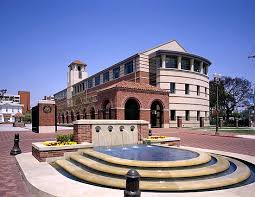
USC Marshall School has a top international business experience for undergrads.

Here are several programs where high school students can explore whether a business career is a match for them:

Stevens Institute of Technology Business Program – students are exposed to marketing, finance (including Quantitative Finance), management, and business law in this one-week intensive experience.

University of Southern California Exploring Entrepreneurship – students earn 3 USC college credits in this 4-week course, which blends business theory and the practice of being an entrepreneur.

Business Week (Throughout the USA) – Several states across the country offer “Business Week” programs, which are one-week business intensives that integrate business concepts, mentoring, and team projects with local leaders. There are Business Week programs in the following states:

  • Alaska
  • Colorado
  • Ohio
  • Pennsylvania
  • South Carolina
  • Utah
  • Washington

If your state is not listed here, you may want to search online with “(your state) Business Week high school students” and see what comes up.

What pre-business summer programs have you found for high school students?

Pre-Med Summer Programs for High School Students

Pre-med summer programs for high school students have a variety of options to explore the healthcare field during the summer. What I generally recommend is that students consider a broader exploratory interest after 9th grade, then apply to those programs in specific healthcare fields after 10th and 11th grades. One of the reasons that I suggest doing it this way is because I want students to realize early on that they do not have to major in a science in order to attend medical school. Yes, you should be comfortable with the sciences, but your major can be as far-ranging as philosophy or music, as long as you meet the course requirements to apply to medical school.

 Pre-Med Summer Programs for High School Students
Students must know that these pre-medical summer programs tend to be very selective, with rigorous application processes. The applications are typically due during the winter and often include submitting transcript, test scores, essays, and teacher recommendations. The application process itself is worth the effort, whether or not you’re admitted. It’s good experience.

Here are several programs that high school students with pre-medical interests may want to explore:

Boston University Research Internship in Science and Engineering – students participating in this program get a rare opportunity to conduct research with university professors. Perhaps there is even an opportunity to publish as well.

Drexel Mini-Med Summer Camp – This summer opportunity allows students to observe surgical procedures, shadow physicians during clinical office hours, and participate in medical simulations.

University of Florida Student Science Training Program – The emphasis of this program is on research with a faculty team for students not only interested in healthcare, but also math, computer science, or engineering. This could be a good opportunity to learn about other fields that may inform trends in healthcare.

These are examples which I hope will encourage you to research other programs or, better yet, create a similar program in your own community that would be a good match for next summer! Please let us know what you discover in the comments below.

Career Exploration for Students: What Do I Want To Be When I Grow Up?

Do teenagers really know what they want to do in life? In short, some of them do and some of them definitely don’t. When I’m guiding my college-bound high school students, it doesn’t matter if they know what they want to be when they grow up. I encourage career exploration for students to happen in the summer.

Case Study 1: “I want to be a medical doctor.”

Becoming a medical doctor is more than just majoring in biology. There are different types of doctors. There are many summer options where high school students can learn more about the medical field:

  • Do research at a university
  • Participate in clinical rounds through a shadowing program
  • Volunteer in a hospital, or
  • Travel on a cultural exchange that supports healthworkers.

Each summer when my students spend time in one of these activities, it always changes their perspective on the health field . . . either confirming their interest, finding a new sub-specialty interest, meeting a new mentor or deciding that they have a totally different interest.

Case Study 2: “I don’t know what I want to do in college or after.”

The most popular major for incoming college freshmen is “Undecided.” That may work well for a campus that offers the flexibility for students to explore different majors and still graduate in four years. If a college doesn’t offer that flexibility, then students can waste a lot of time and money “figuring out” what they want to do. I encourage my high school students to participate in an activity of interest during the summer. In the summers after 9th, 10th, and 11th grade, students can

  • Participate in an academic program on any topic, from history to psychology to physics
  • Volunteer in local community
  • Be creative through the fine or performing arts
  • Get a job or any other purposeful pursuit.

Either way, there is no reason that any college-bound teen should say . . .”I just hung out for the summer” especially if you’re “undecided”.

Case Study 3: “I want to be an engineer.”

This is probably the second most common interest I hear from high school students. I hate to say it but I don’t think that most high school students really know what an engineer does. There are countless summer engineering programs for high school students, especially for girls. Students can learn about the specific fields of engineering as well as meet engineers. Some programs even incorporate a hands-on problem for students to solve. These programs go a long way in helping students to not only learn about the various fields but determine if they like it enough to pursue as a major in college. (The engineering majors are one of the more intensive and time-demanding majors to pursue.) The cool thing about the summer engineering programs is that you can even find programs that are free to attend.

Case Study 4: “I think I want to do business.”

Business is a popular field of interest, yet very broad. When I ask my students which area of business interests them, they often say “management” or “general”. Still . . . very broad. That response tells me that a student has several options for the summer:

  • Attend a summer business program across topics
  • Collaborate on a business project
  • Participate in a job shadowing/internship, or
  • Get a job.

There has been a lot of interest lately in starting a business. For my students interested in entrepreneurship, I encourage them to

  • Check out summer entrepreneurship programs
  • Attend local, small business resource events, or
  • Write a business plan.

Again, with all the different options for high school students interested in any area of business, every teen can find out if this area interests them or not, before going to college.

In our upcoming blog posts, we will highlight specific summer programs for high school students to explore career interests.

Where to find summer coding camps for Teens

compass college advisory

I am particularly concerned about girls in STEM. Over the years, there’s been a significant drop in females graduates in computer science for example. According to the girlswhocode.com website, women represent only 12% of computer science graduates versus 37% in 1984. What happened??

For me personally, I started out in the STEM area as a college freshman. The large, lecture-style STEM freshman year courses were clearly designed to weed out the ill-prepared students. My high school AP Physics course did not prepare me for the rigors of introductory physics at Stanford. Even with a “curve”, my test grades in this course discouraged me from continuing in the department.

In my consulting practice, I have had several female clients who are excited about the STEM areas earlier in high school. As the senior year draws near, however, their interest wanes. One of the ways that I try to keep their interests high or sometimes pique their interest is to introduce STEM summer camps.

Here is a list of camps that offers a great starting point for finding camps for all teens, especially girls: Summer Coding Camps for Kids.

My hope is that the summer camps will stimulate their creativity and show them practical applications for STEM.

Another telling statistic today is that only .4% of female freshmen plan to major in computer science, whereas 74% of middle-school girls are interested in STEM. What’s happening in middle and high school for these girls??

Teen traveling for summer camps?

Charlottesville Summer Camp

As a parent of 1 pre-teen and 2 teenagers, I sometimes feel like my entire spring is spent planning their summer camps. Finding a camp that fits well with our summer goals is actually not so hard. The most time-consuming aspect is figuring out all the travel arrangements for residential programs. It is not always possible for my husband or me to travel with them. So figuring out the Unaccompanied Minor policies can take the better part of several weeks. For example, my younger son is participating in a program in Virginia. I was so excited to find a ticket into Charlottesville for about $150. I was ready to book the ticket when I realized that their age minimum to fly as an adult is 15. For my well-traveled 13-year-old, there would be an additional fee of $100 and the flight must be non-stop!! Yikes! Where can you fly non-stop on US Airways? Certainly not to Charlottesville, VA, unless it’s already in driving distance.

To save families some time on figuring out the unaccompanied minor airline policies, here is a summary:

American Airlines:

Children 8 through 11 years of age must travel with another passenger at least 16 years of age or they will be considered Unaccompanied Minors. For travel on American Airlines, American Eagle, and AmericanConnection unaccompanied children may travel on nonstop, direct and connecting flights. If the itinerary includes a connection to/from another airline, including codeshare and oneworld partners, the unaccompanied children will not be accepted.

Children 12 through 17 years of age – Use of the Unaccompanied Minor service is not required, but is available upon request.

via American Airlines Offers Information For Traveling With Children And Infants On AA.com

Delta:

The Unaccompanied Minor Program ($100 fee) is required for all children 5-14 years old when traveling alone. Ages 5-7  can only travel on nonstop flights. Ages 8-14 can travel on nonstop and connecting flights. The program is optional for children age 15 – 17.

via Children Traveling Alone

Southwest:

Children ages five through 11 traveling without an accompanying Passenger age 12 or older must travel as an Unaccompanied Minor (UM) on Southwest Airlines. Southwest will charge $50 each way ($100 roundtrip) in addition to the air fare per child for UMs to travel.

via Unaccompanied Minor

United:

Children 5 to 11 years of age who are not accompanied by  someone who is at least 18 years of age on the same aircraft are considered unaccompanied minors. Ages 5 to 7 may only travel on nonstop flights. Ages 8 to 11 may travel on any flight (nonstop or connecting) operated by United or United Express. However, travel will not be allowed on the last connecting flight of the day — unless the connecting flight is the only published service to that destination. Unaccompanied minors are not accepted on flights which require an overnight stay in order to make a connection.

via United Airlines – Children traveling alone

Virgin America:

Children 5-14 may travel unaccompanied on non-stop flights only. Virgin America assistance is required. Young adults 15 through 17 are considered adults unless the parents or guardians wish unaccompanied minor services to be provided by Virgin America. The charge for Unaccompanied Minor service is $75 for short-haul flights (flights less than 2 hours in duration), $100 for long-haul and medium-haul flights (flights more than 2 hours in duration), or $125 for International flights on Virgin America (arriving or departing from Mexico).  Unaccompanied Minor reservations cannot be made online.

via How can my child travel unaccompanied?

Where is your student going this summer?


Enhanced by Zemanta

Ohio University in Athens for the Summer and Academic Year

Ohio University in Athens

Who knew it would be so difficult to find on-campus parking at Ohio University in Athens . . . in the middle of the summer? My tour guide stated that this summer was unusually busy on campus and likely due to students taking courses in preparation for the university changeover from quarters to semesters. The 2011-12 academic year will be the last year that Ohio University is on the quarter system.

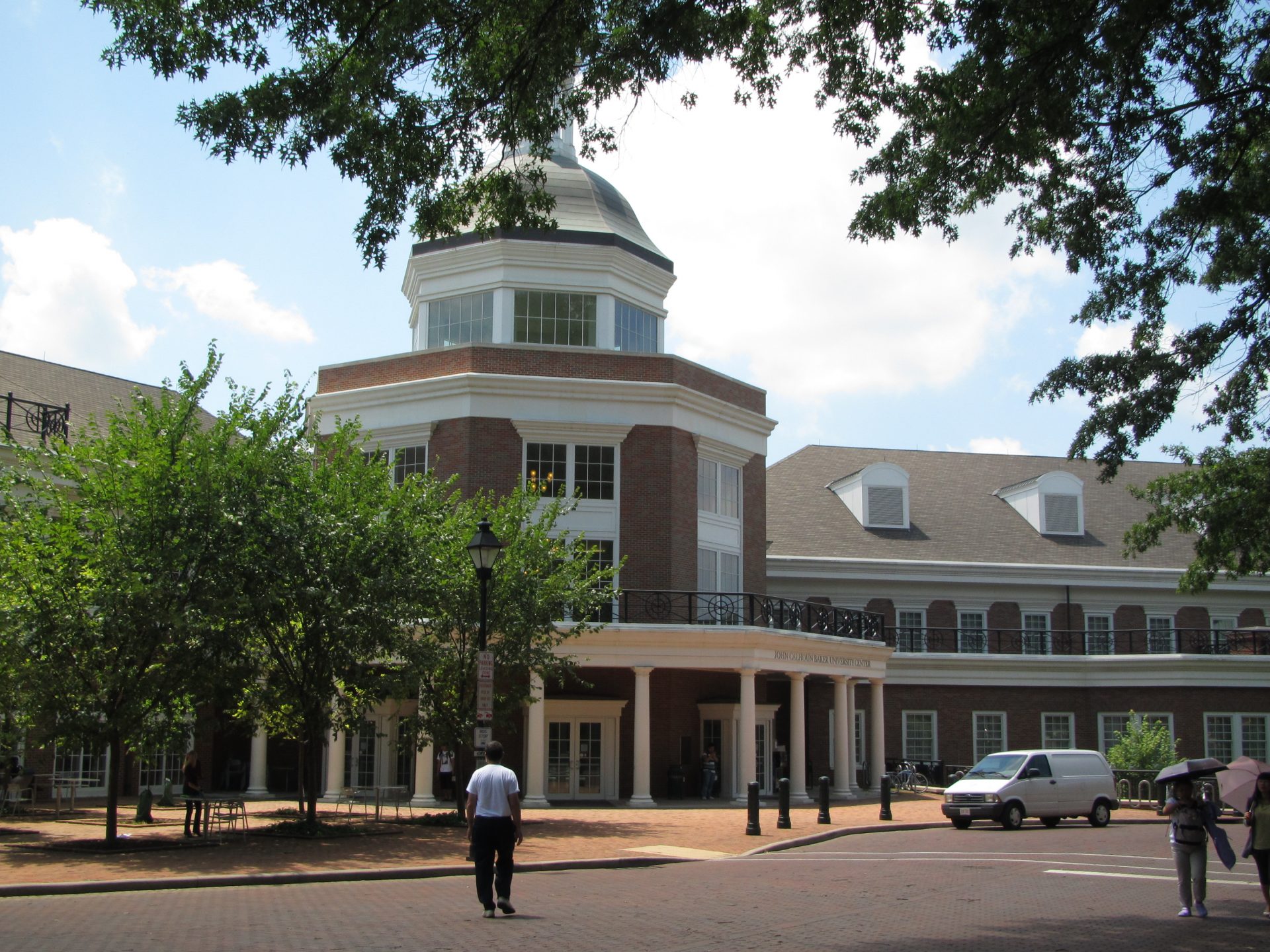
IMG_0072
Photo of the student center at Ohio University

In addition to enrolled students taking courses this summer, there are 3 other cohorts on campus:

  • International students – I saw a lot of international students. I was surprised to see so many international students since there is a relatively small international community during the academic year (less than 8%). In fact, only about 17% of their student body are non-Ohio residents.
  • Rising Freshmen – OU encourages its freshman students in the Honors College to begin in the summer session. Those students participate in smaller learning communities. Administrators noted that the summer session is a program to help students transition to college and hopefully improve retention. The most recent graduation rate for OU is 69.7%.
  • Middle and high school students – There are a host of summer programs on OU’s campus for both day and residential students. Nike hosts several sports camps there each year. Additionally, OU hosts its own summer program for high school students. During my visit, I met with the directors of the summer programs and they have been fine-tuning this program since its inception. I will be meeting with them again during the academic year to learn more about upcoming changes.

As rising juniors and seniors are traveling this summer, I encourage them to take advantage of opportunities to visit area campuses. Even if you visit a campus that may not be of interest, you can still learn a lot about available options and make comparisons. When I use the term “area” I am referring to those campuses that are near your home or proximal to where you’re already traveling. I am not suggesting that families make special distant trips just for the sake of visiting – that can be very costly and time-consuming. Campus visits should be done more thoughtfully and strategically than that.

Please listen to our radio show on-campus visits and get more information about how you can make the most of your campus visits.